

Shared-space cleaning works best when roommates agree on a routine and handle small messes before they build up. For UC Berkeley off-campus housing cleaning, set clear expectations for the kitchen, living room, and bathroom, then divide tasks and reset each space regularly. A simple shared checklist can make it easier to see what needs attention.
Cleaning can become a source of friction when roommates have different standards or assume someone else will handle a task. A practical plan sets clear expectations and keeps everyday upkeep manageable alongside classes, work, and other commitments.
This guide lays out a step-by-step routine for shared kitchens, living rooms, and bathrooms, including how to coordinate responsibilities and when professional cleaning may help. You’ll learn what to tackle in quick daily resets, what to include in regular upkeep, and how to make the arrangement work for the household.
Key Takeaways
- Set shared expectations for kitchens, living rooms, and bathrooms, then assign recurring tasks so routine upkeep doesn’t fall to one roommate.
- Make shared-cost cleaning easier to manage by agreeing on the scope, schedule, and payment split before booking.
- When evaluating a cleaning service, understand what documentation can help you assess insurance, licensing, and trustworthiness.
- Recognize when a household routine is enough and when a professional standard house cleaning may help reset shared spaces.
- Use a move-in or move-out clean for a transition rather than treating it as the same service as regular household upkeep.
Cleaning shared kitchens, living rooms, and bathrooms
A clear routine makes UC Berkeley off-campus housing cleaning easier to coordinate. In Berkeley apartments, students can avoid small chores turning into roommate disputes by agreeing on what each room needs and who handles it.
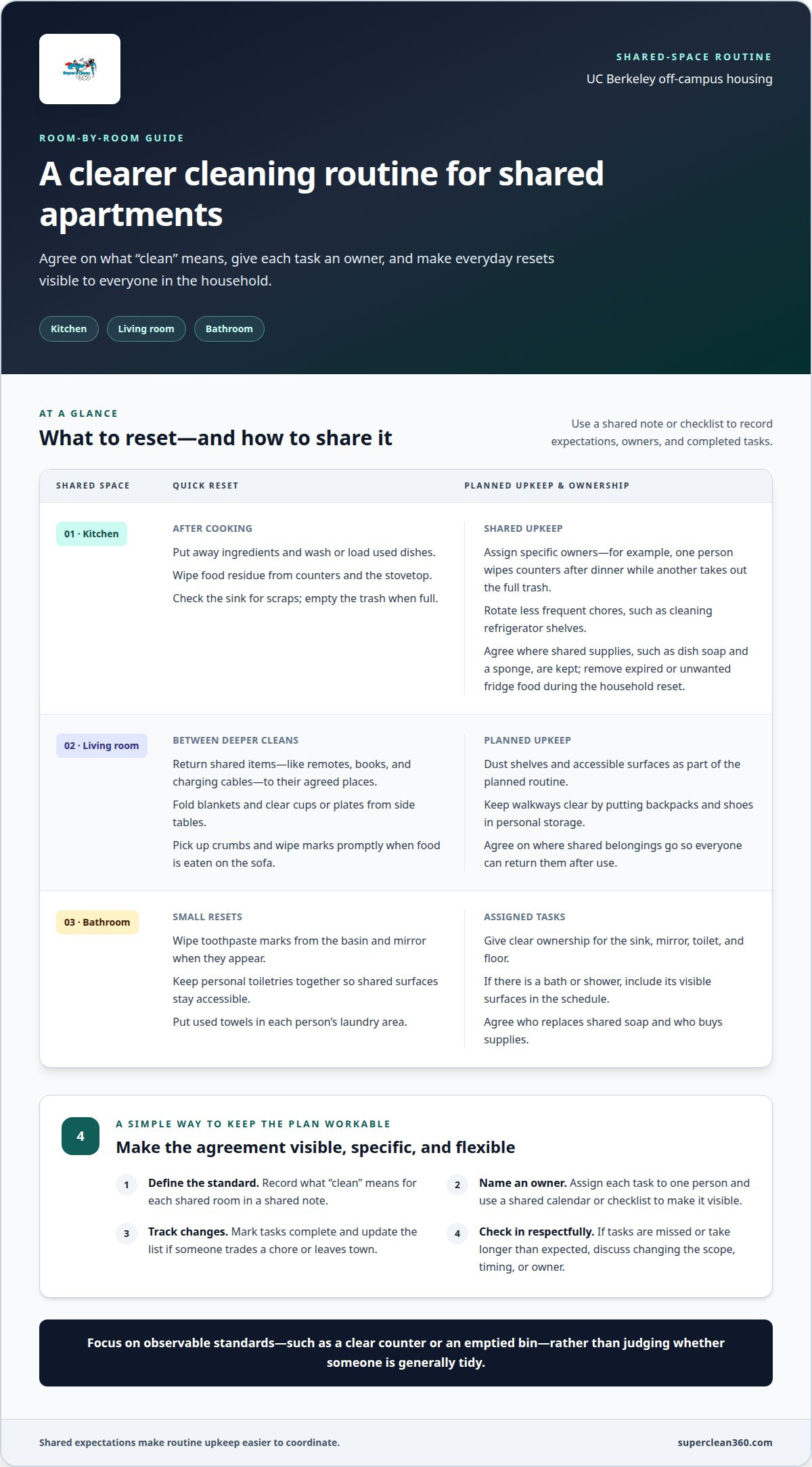
- Agree on a visible standard. Before dividing chores, discuss what “clean” means in each shared room. In the kitchen, that might mean clearing the sink after cooking and wiping food-preparation areas. In the living room, it could mean putting away personal items and returning cushions to the sofa. For the bathroom, agree on how to handle the sink, mirror, toilet, and floor. Record the decisions in a shared note so everyone can refer to the same expectations.
- Assign tasks by room and owner. Give each task one responsible person instead of leaving it as a vague group assignment. For example, one roommate can wipe kitchen counters after dinner while another takes out the full trash. Rotate less frequent chores, such as cleaning refrigerator shelves, so the same person doesn’t always do them. A shared calendar or checklist makes responsibilities visible. Add a box to mark each task complete, and update the list when someone trades a chore or leaves town.
- Reset the kitchen after each cooking session. Put away ingredients, wash or load used dishes, and wipe food residue from counters and the stovetop. If a pan leaves grease near a burner, clean the spot rather than waiting for the next roommate. Check the sink for food scraps and empty the kitchen trash when full. Keep shared supplies, such as dish soap and a sponge, in an agreed location. During the household’s regular reset, ask everyone to remove expired or unwanted food from refrigerator shelves.
- Keep the living room usable between deeper cleans. Return shared items, such as remotes, books, and charging cables, to their agreed places after use. Fold blankets and clear cups or plates from side tables before they pile up. If roommates eat on the sofa, pick up crumbs and wipe marks promptly. Dust shelves and accessible surfaces as part of the planned routine. Keep walkways clear by putting backpacks and shoes in personal storage, not in another roommate’s space.
- Give bathroom tasks clear ownership. Decide who cleans the sink, mirror, toilet, and floor, and record each assignment. Wipe toothpaste marks from the basin and mirror when they appear. Keep personal toiletries together so shared surfaces remain accessible. Replace an empty shared soap container if the household has agreed who buys supplies. If the bathroom has a bath or shower, include its visible surfaces in the schedule and put away personal products after use. Place used towels in each person’s laundry area.
- Match the routine to the apartment’s amenities. A dishwasher changes how roommates manage dishes, while an in-unit laundry area affects where towels and cleaning cloths go. Identify which supplies are shared and which are personal, then store shared items together. If a chore requires a tool nobody owns, such as a mop, agree on who will get it and where it will be kept. When schedules conflict or shared spaces need a broader reset, one-time house cleaning can complement everyday roommate upkeep.
When a shared supply runs out, tell the household or add it to the shared list so everyone knows it needs replacing. Keep the routine practical: if a task takes longer than expected or is repeatedly missed, discuss changing its scope, timing, or owner. A brief check-in can address mismatched expectations before frustration builds. Focus on observable standards, such as a clear counter or emptied bin, rather than judging whether someone is generally tidy. If a roommate is away, agree in advance whether their tasks will wait or be temporarily reassigned, and record the change to avoid unspoken expectations.
Renters can discuss cleaning standards with potential roommates before deciding to share a home. Talk through kitchen, living room, and bathroom routines, including which tasks matter most and how often they should be done. This gives everyone a chance to explain preferences and identify differences early. If expectations don’t match, decide whether a shared routine feels workable before moving in together. Once you live together, revisit the agreement as household needs change, keeping the conversation focused on specific chores rather than blame. A clear, flexible plan helps everyone understand their responsibilities and raise concerns respectfully.
How can UC Berkeley students find affordable or shared-cost cleaning services?
- Decide what you want cleaned before comparing options. List shared areas, such as the kitchen, living room, and bathroom, then note specific tasks. One household might need floors, counters, and bathroom surfaces cleaned; another may need help with accumulated grime. A clear list distinguishes routine upkeep from a more thorough reset. It also gives each service the same description of the apartment, making estimates easier to compare.
- Choose a service scope that fits the apartment’s condition. Standard house cleaning suits spaces maintained through household routines, while deep cleaning provides a more detailed reset. A vacant apartment before or after a move calls for move-in or move-out cleaning, rather than a recurring visit for shared spaces. Describe visible concerns, such as grease near the stove or buildup around bathroom fixtures. Matching the scope to the need helps avoid paying for tasks roommates can handle themselves.
- Request estimates using the same details. Share the apartment’s size, rooms, requested tasks, and whether the visit is one-time or recurring. Include relevant access details, such as stairs, parking, or entry instructions. An estimate depends on the home, requested scope, and cleaning frequency. Providing comparable details helps roommates assess whether estimates cover equivalent work.
- Agree on a cost-sharing method before booking. Roommates can split a shared-space cleaning expense evenly, divide it by bedroom count, or adjust contributions if one person uses a space more heavily. For example, the household might agree that someone who regularly cooks for everyone contributes differently. Record the arrangement in a shared note, including who pays and when. Revisit it if roommates change or the cleaning scope expands.
- Use a one-time visit strategically. A single professional clean may suit a household preparing for guests, starting a new chore routine, or resetting shared spaces after a busy term. Roommates can then maintain the result with assigned everyday tasks. Before booking, identify priorities such as kitchen surfaces, bathroom fixtures, and common-area floors. This keeps paid work focused on the tasks the household wants help with.
- Compare recurring and occasional schedules. A recurring visit may suit apartments where roommates want ongoing help with shared areas. An occasional appointment may fit a household that handles routine chores but wants periodic support. Ask how the scope may change between visits and whether residents need to prepare rooms beforehand. Compare the tasks and schedule, not just the visit label. The right arrangement depends on roommates’ routines, the apartment’s condition, and their willingness to clean between appointments.
- Look at the full household budget, not one roommate’s preference. Discuss the cleaning plan alongside other shared expenses, then agree on a contribution everyone accepts. If the full scope doesn’t fit, prioritize the rooms that create the most work and handle simpler tasks yourselves. For instance, roommates might use professional help for bathrooms and floors while rotating dish and counter cleanup. A written decision prevents confusion about who approved the expense.
- Confirm the task list and payment plan in writing. Before booking, record the selected rooms, requested tasks, visit frequency, cost split, and payment date. Ask what the estimate includes so roommates can distinguish routine cleaning from detailed work. Keep the agreement in a shared document or group message. This gives everyone the same reference if a roommate moves, the apartment’s needs change, or the group adjusts its cleaning arrangement.
How can students verify a cleaning service is licensed, insured, and trustworthy?
- Ask what “licensed” means for the specific service. Licensing can refer to different credentials, so ask for the exact license type and issuing authority. Don’t treat business registration, professional credentials, and local permits as interchangeable. If a service says it holds a particular license, note its formal name and identifying details. That gives you something specific to verify instead of relying on a broad claim.
- Verify any stated license with its issuing authority. Use the official agency or government office responsible for that credential. Search the business name exactly as it appears on the estimate, then compare the record’s name and status with the service’s information. If a license belongs to an individual, check that the name matches. Note what you reviewed and when, especially if roommates are comparing several companies.
- Request evidence of insurance. Ask for a current certificate or other written proof showing the insured business name and coverage dates. Compare those details with the name on the estimate or service agreement. If the document names a different business, ask for an explanation before relying on it. Read what the document actually says rather than assuming “insured” applies to every possible loss or circumstance.
- Check that the paperwork identifies the same business. Compare the estimate, invoice, insurance document, and booking correspondence. Look for consistent business names and contact details across the records. If an estimate uses one name but payment instructions use another, ask for a written explanation before paying. Consistent documentation helps roommates know which business agreed to do the work and where to direct questions about the appointment.
- Get the scope and terms in writing. Ask for a written estimate identifying the rooms, tasks, frequency, and any preparation expected from residents. For example, “clean the kitchen” is less precise than listing counters, sink, stovetop, and floors. Confirm cancellation and payment terms before booking. A clear document helps students compare equivalent services and avoid disagreement about whether a task was included.
- Assess communication through specific answers. Notice whether the service clearly explains its process when you ask about access, supplies, scheduling, or changes to the task list. A useful response addresses the question directly and matches the written scope. Save messages about requests, such as leaving a bedroom untouched or focusing on shared rooms. This helps roommates remember what they agreed to without relying on verbal recollection.
- Look for references you can evaluate. If a service provides references, ask about comparable work, such as cleaning an occupied apartment or focusing on shared spaces. Ask whether the agreed tasks were completed and communication was clear. Treat online reviews as context, not proof that a service will meet your household’s needs. Look for consistent details across reviews instead of relying on one dramatic comment.
- Protect apartment access and belongings. Before the appointment, agree on which rooms are included and how the cleaning team will enter. Put away valuables, secure personal documents, and tell roommates where shared supplies are stored. Keep the written agreement and payment record in a shared folder. These steps document the arrangement and help the household coordinate access without sharing unnecessary personal information.
Trustworthiness also matters when making wider housing decisions. When comparing off-campus housing in Berkeley, students can ask whether cleaning is included in the housing arrangement or is a separate service. Keeping stated housing expenses alongside a cleaning estimate helps roommates discuss the full cost without assuming a service is included.
Housing searches can also affect when students need to make these checks. Students searching for fall housing in Berkeley are advised to begin looking around March or April. UC Berkeley Off-Campus Housing Rental Services recommends beginning a housing search 6-8 weeks before move-in. UC Berkeley Student Legal Services provides resources about landlord-tenant disputes, evictions, and off-campus housing. Students can consult those resources when a cleaning arrangement is connected to a housing question, while keeping service-specific licensing and insurance questions directed to the relevant issuer or insurer. Before committing, roommates can retain the written estimate, insurance evidence, and booking correspondence together, so each person can refer to the same terms and records if questions arise.
Super Clean 360: Standard House Cleaning
Super Clean 360 offers Standard House Cleaning for shared apartments that need help maintaining everyday cleanliness. It can support a household’s routine for common areas such as kitchens, living rooms, and bathrooms, while roommates continue handling daily dishes and personal belongings. Cleaning professionals use professional supplies and premium HEPA-filtered vacuums.
Choose the service that fits the apartment’s condition and timing. Standard House Cleaning supports regular upkeep; Deep Cleaning provides a more detailed reset. Move-in/Move-out Cleaning suits a housing transition, while Post-Construction Cleaning addresses cleanup after construction work. These services meet different needs, so define the rooms and tasks that matter to your household.
For recurring customers, the same cleaning professionals are assigned whenever possible. To discuss routine cleaning for your shared space, explore Standard House Cleaning or request an estimate.
Make shared cleaning part of the household routine
Use the cleaning plan as a starting point, then review whether it still suits the apartment. A brief check-in after a busy stretch or before a lease transition can help roommates decide what support would make the next stage easier. This keeps UC Berkeley off-campus housing cleaning connected to how the household actually lives, rather than treating it as a one-time task.
If professional support would help, Super Clean 360 offers residential cleaning options for ongoing upkeep, detailed cleaning, and move transitions. Consider the service that matches your apartment’s immediate needs.
With a clear plan, roommates can spend less time coordinating cleaning and more time settling into their shared home.
Frequently Asked Questions
What is typically included in a standard apartment cleaning in Berkeley?
Standard apartment cleaning generally covers routine tasks in the rooms and areas agreed upon before service. For example, a household might request cleaning for kitchen surfaces, bathroom fixtures, and floors in shared rooms. The checklist depends on the apartment’s needs and chosen scope, so list priority areas when requesting an estimate. Deep cleaning and move-in or move-out cleaning are separate options for more specialized situations.
Are move-in and move-out cleaning services available near UC Berkeley, and what do they cost?
Move-in and move-out cleaning is an option for a vacant apartment before or after a move. The estimate depends on the home and requested tasks, and is provided after a quote request.


