

Does a janitorial service include restroom sanitation? Yes. A janitorial service in Berkeley, CA can include cleaning and disinfecting restroom fixtures, floors, and frequently touched surfaces, alongside routine tasks such as trash removal and floor care. The exact schedule depends on how the space is used and how much cleaning it needs.
Restrooms are only one part of a clean, well-maintained workplace, and the right service should reflect your facility’s day-to-day demands. This guide explains what commercial janitorial cleaning can cover, how to think about visit frequency, and what to consider when choosing floor care and disinfection services in Berkeley.
You’ll also learn how routine janitorial work differs from less-frequent deep cleaning, so you can make a clear plan for your commercial space without taking on another management burden.
Key Takeaways
- Restroom sanitation can be part of routine commercial cleaning, alongside care for shared spaces and floors.
- Match cleaning frequency and task priorities to your facility’s use, traffic, and operational needs.
- Evaluate providers by how clearly they define scope, scheduling, communication, and quality checks.
- Understand how facility size, flooring, and requested tasks shape a janitorial estimate without relying on generic price ranges.
- Learn how Super Clean 360’s 360 Triple-Check System supports commercial and janitorial cleaning, and what to expect from a facility walkthrough.
Commercial janitorial services in Berkeley
Yes. Commercial janitorial cleaning can include restroom cleaning, such as cleaning toilets, sinks, mirrors, floors, and frequently touched fixtures. A janitorial service in Berkeley, CA can also cover routine tasks in shared workspaces, with the schedule tailored to how the facility is used.
For example, an office may need visits several times a week, while a high-traffic space may need daily cleaning. Routine service can include trash removal, vacuuming, dusting, floor care, disinfecting high-touch surfaces, and maintaining common areas. That recurring workplace scope differs from residential cleaning, which focuses on household rooms and living spaces. For a Berkeley residence, house cleaning addresses a different setting and set of needs.
Company Reviews and Service Specialties
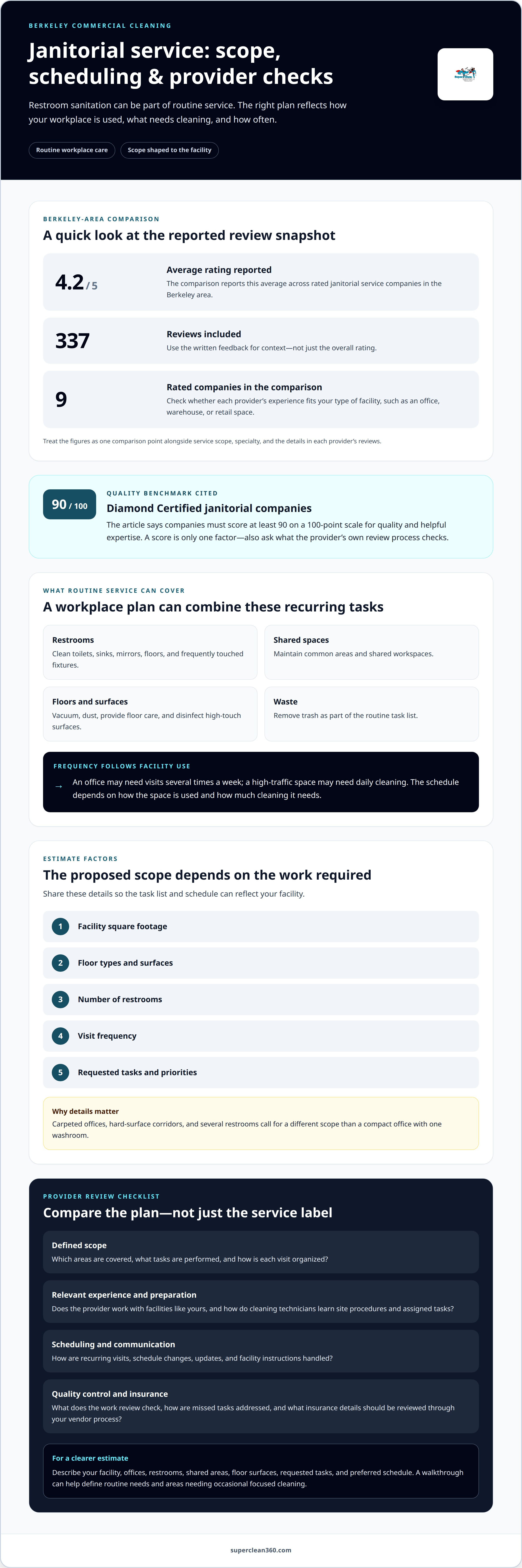
Reviews offer context, while service specialties show whether a company’s experience fits your facility. A Berkeley-area comparison reports an average rating of 4.2 out of 5 stars, based on 337 reviews across 9 rated janitorial service companies. Consider that figure alongside the written feedback, the services described, and whether the provider handles workplaces like offices, warehouses, or retail stores.
Pricing and Estimate Factors
An estimate reflects the work required, not just the facility’s address. Relevant details include square footage, floor types, the number of restrooms, visit frequency, and requested tasks. For example, a space with carpeted offices, hard-surface corridors, and several restrooms needs a different scope from a compact office with one washroom. A clear task list makes the proposed scope easier to assess.
Green Cleaning Options
“Green cleaning” can refer to product choices, packaging, or cleaning methods, so the term alone does not explain what a service includes. Ask for specific details about the products and where they are used. A facility might request certain products for office areas while requiring a separate plan for restroom cleaning. Specific descriptions help clarify the approach without relying on broad environmental or health claims.
Requesting a Janitorial Quote
To request a commercial cleaning estimate, describe your facility, the tasks you need, and your preferred schedule. Include the locations of offices, restrooms, and shared areas, along with floor surfaces and current priorities. A facility walkthrough helps define the scope in context, including areas needing routine attention and those requiring occasional focused cleaning. The proposal should make the tasks and schedule clear.
Choosing a janitorial provider
Choosing a janitorial service in Berkeley, CA means matching the provider’s experience, work plan, quality controls, and communication to your facility. An office, retail space, and warehouse each present different demands. Look beyond a general service label and examine how the provider organizes tasks for the type of workplace you operate.
Start with the scope. A suitable plan identifies the areas covered, the tasks performed, and the schedule for each visit. For example, an office plan might distinguish reception, meeting rooms, and staff-only spaces. These details clarify expectations and help identify gaps before recurring service begins.
- Relevant experience: Look for experience with facilities similar to yours, such as offices or retail stores.
- Staff preparation: Understand how cleaning technicians learn site procedures and assigned tasks.
- Scheduling reliability: Review how recurring visits and schedule changes are handled.
- Quality control: Ask how completed work is reviewed and missed tasks are addressed.
- Insurance coverage: Review coverage details as part of your business’s vendor process.
- Communication: Identify who receives updates and how facility instructions are recorded.
Quality control deserves close attention. Diamond Certified janitorial companies must score at least 90 on a 100-point scale for quality and helpful expertise. A score is only one comparison point. Also examine what the provider’s review process checks, such as whether agreed tasks in restrooms, shared rooms, and entry areas receive attention.
The service plan should also fit your facility’s operations. A reception area with steady visitor traffic may need different attention from a staff-only meeting room. The plan should explain how tasks are organized and how priorities can be updated as the space changes. Clear communication helps prevent misunderstandings about the agreed scope.
Finally, consider how feedback is handled. A clear contact path and written instructions make it easier to report an overlooked area or revise priorities. If a retail store changes its layout, for instance, the plan may need to include new aisles or customer areas. These practical details help you assess whether the service process suits your facility over time.
Before deciding, compare providers using the same priorities: experience, customizable plans, trained staff, scheduling reliability, quality control, insurance coverage, and communication. Ask each provider to explain how its proposed work plan can be adjusted to your facility and how staff are prepared to follow its instructions. This makes it easier to assess the process behind the service, not just the general description of what is offered.
Clarify how schedule changes are handled, how completed work is reviewed, and how to raise concerns. Review insurance information through your business’s vendor process, and consider whether the company’s communication approach fits your needs. Comparing these details alongside the proposed scope helps set expectations before service begins.
What factors affect janitorial service estimates?
An accurate estimate depends partly on details that affect how cleaning work is coordinated at your Berkeley facility. Entry procedures, building rules, and the need to work around occupied spaces can all affect the scope. A quote based on clear site information is easier to assess than one built on assumptions.
Access is one practical consideration. A secured building may require a designated contact, visitor registration, or an escort before cleaning technicians can enter certain areas. For example, explain how locked workrooms can be accessed and whether access changes during the week.
Business operations can also shape the service plan. Customer-facing areas may need to be cleaned without disrupting normal activity, while a private office could have restrictions on when cleaning can take place. Share these constraints early so the proposal reflects coordination needs instead of treating every room as equally accessible.
- Entry procedures: Note sign-in requirements, access cards, and any escort arrangements.
- Restricted areas: Identify rooms with separate entry rules or limited access.
- Occupancy constraints: Explain where cleaning must avoid disrupting staff or customers.
- Site coordination: Identify the facility contact who communicates access changes or special instructions.
- Scope revisions: Clarify how added requests or changed site conditions affect the written plan.
Ask for a clear distinction between included tasks and any assumptions or exclusions. If a secured room cannot be accessed during a walkthrough, for example, the proposal should explain how that area is treated. This helps ensure expectations match the areas the service team can enter under the agreed arrangements.
Changes after service begins can affect the scope. A new access restriction, revised building procedure, or request to include another area may require an updated plan. Documenting changes gives both sides a shared reference and prevents one-time requests from being mistaken for ongoing tasks.
Before accepting a proposal, compare its assumptions with your facility’s actual operating requirements. Confirm that entry instructions, restricted spaces, and coordination responsibilities are described accurately. This keeps the estimate focused on work that can be done under the agreed conditions.
How to compare Berkeley janitorial companies
Compare proposals by how clearly they turn your facility’s needs into a working plan. Similar service labels can conceal different assumptions about access, task records, and changes to the scope. A useful proposal explains how the work will be managed after service begins, not just what the general service description says.
Review how each proposal records site-specific instructions. For example, a building may require cleaning technicians to avoid a conference room during scheduled meetings. A documented process should show where that instruction is recorded and how updates reach the service team, rather than leaving it to an informal conversation.
Consider how the plan can adapt over time. A Berkeley workplace may add a room, change access procedures, or adjust which areas are occupied. Compare how each proposal handles updates to the agreed plan, including how revised tasks are documented and communicated to the people responsible for service.
- Task records: Compare how completed work and outstanding requests are documented.
- Change handling: Look for a defined way to record revised instructions.
- Access notes: Check how entry details and restricted areas are communicated.
- Issue follow-up: Review how concerns are logged and tracked to resolution.
- Plan clarity: See whether the written agreement distinguishes recurring tasks from added requests.
Written records are especially useful when several people manage a facility. If an office manager changes, documented instructions can preserve essential site details without relying on memory. Compare whether each proposal identifies how the facility contact shares updates and how the provider reflects them in the working plan.
Also examine how the company handles a missed or disputed task. A practical process identifies where the concern is recorded, who reviews it, and how the service plan is clarified afterward. This tells you more about how exceptions are managed than broad assurances do.
Before choosing, compare the proposals side by side, noting differences in documentation, update procedures, and follow-through. For instance, one plan may explain how revised access instructions are recorded, while another may leave the process unstated. These operational details help you assess the working relationship without relying on unsupported rankings.
Do Berkeley janitorial services offer green or eco-friendly cleaning?
Some Berkeley janitorial services offer green cleaning options, but the label can describe different products or practices. For one office, it might mean using selected cleaning products; for another, it could include reducing disposable supplies. Ask what the term means in the actual service plan, rather than relying on a broad environmental claim.
Product details make the approach easier to understand. A clear description identifies which products are used in areas such as desks, glass, or restroom fixtures, and whether products vary by task. For example, a product used on office surfaces may differ from one used for restroom cleaning.
A general claim alone doesn’t show which products are used or how they fit your workplace. A Berkeley office can assess the information by reviewing product names, intended uses, and any handling instructions provided for the facility.
- Product transparency: Look for product names and the tasks each product serves.
- Scope clarity: Identify whether green options apply throughout the facility or only in selected areas.
- Waste practices: Ask how the plan handles disposable cloths, liners, and packaging.
- Surface suitability: Confirm the described approach accounts for materials such as glass, tile, and finished floors.
Environmental claims should be specific enough to assess. “Eco-friendly” alone does not explain ingredients, packaging, or disposal practices. A more useful description states what changes, such as using a particular product for routine desk cleaning or reducing single-use materials in common areas. That detail helps a facility understand the approach without assuming every product or task has the same impact.
Cleaning methods matter alongside product choices. For example, a plan for a Berkeley meeting room might distinguish dusting, spot cleaning, and floor maintenance. Clear instructions help cleaning technicians follow the intended approach across assigned spaces and make it easier to discuss preferences for fragrance or product use without making unsupported health or safety claims.
Before adopting a green option, connect each stated practice to a real task in your facility. A product list, defined application areas, and clear waste practices provide more useful information than a general label. This keeps environmental priorities practical while preserving the cleaning scope your Berkeley workplace needs.
Commercial cleaning from Super Clean 360
Super Clean 360 provides commercial and janitorial cleaning for Berkeley businesses that need recurring care for workspaces. A facility walkthrough helps define the areas, tasks, and schedule that fit your building. It also gives the cleaning team context about how the space is used, from shared rooms to high-traffic entrances.
Commercial cleaning requires a clear scope. A plan can identify routine attention for restrooms, common areas, floors, and frequently touched surfaces. Priorities depend on the facility and its operations. For example, a business can outline which spaces need regular service and where floor care or disinfection should receive focused attention.
The company’s proprietary 360 Triple-Check System applies to commercial and janitorial cleaning. It is part of the company’s quality-control approach for this work. During a walkthrough, facility priorities can be discussed alongside the cleaning scope, helping align agreed tasks with the building’s layout and operational needs.
Super Clean 360 has operated since 2012 and is local, family-owned, and fully insured. Cleaning professionals use professional supplies and premium HEPA-filtered vacuums. These details provide useful context when a Berkeley business is evaluating how its facility will be serviced, while the proposed scope remains specific to the space.
A walkthrough is also a practical time to discuss:
- Which rooms, restrooms, and shared spaces fall within the service scope.
- How often the facility needs routine cleaning based on its use.
- Which surfaces or areas need particular attention, such as floors or high-touch points.
- How cleaning instructions and priorities will be communicated.
Bring forward the facility’s main concerns, such as restroom upkeep, recurring floor care, or consistency across shared areas. This helps shape a workable plan without assuming every business needs the same tasks or schedule. Super Clean 360 can discuss the scope during a walkthrough, then identify the next steps for commercial janitorial service.
Request a facility walkthrough with Super Clean 360 to discuss your Berkeley workspace.
Frequently Asked Questions
Does janitorial service include restroom sanitation?
Yes. Restroom cleaning can be part of a janitorial service when it is included in the agreed scope. Tasks may cover toilets, sinks, mirrors, floors, and frequently touched fixtures. Supply restocking can also be specified. For a Berkeley workplace, clarify who provides restroom paper products and who replenishes them so responsibilities are clear.
How often should my business schedule professional janitorial services?
Set the schedule according to facility traffic, operating patterns, and how often key areas need attention. An office with regular daily use may need several visits each week, while a high-traffic commercial space may benefit from daily service. A business can also schedule more frequent attention for busy restrooms and entrances than for rooms used occasionally.
What should I look for when choosing a janitorial service provider?
Look for a written scope, relevant commercial cleaning experience, a workable schedule, and a clear process for feedback. For example, a Berkeley retail business should see which customer-facing areas and back rooms are included, not just a general promise to clean the store. Also review how site instructions are recorded, who communicates schedule changes, and how the work is checked.
Why Trust Us for Commercial Building Cleaning?
Super Clean 360 uses its 360 Triple-Check System for commercial and janitorial cleaning. Cleaning technicians make three passes through designated focus areas to verify tasks against specifications. This provides a defined review process for agreed work, rather than a broad claim about outcomes. It applies to commercial cleaning only, not residential services, and the facility’s scope determines which areas receive focused checks.
Why is consistency more important than occasional intensive cleaning?
Routine service keeps regular tasks connected to a consistent facility plan, while one-time deep cleaning addresses specific buildup or overlooked areas. For example, routine attention to a shared breakroom can be part of an ongoing janitorial plan, while focused cleaning may be useful after a renovation. These services have different purposes and can complement each other.
What janitorial services are available in Berkeley, CA?
Commercial cleaning options include office, warehouse, and retail-store cleaning, with recurring janitorial service organized around agreed priorities and facility access. Super Clean 360 also provides commercial cleaning for medical or dental offices when the scope fits. A Berkeley business can define which areas need attention, such as a reception space, staff room, or shared restroom, and establish a suitable recurring or one-time scope.
Which janitorial companies serve Berkeley and nearby areas?
Super Clean 360 serves commercial customers in Berkeley and nearby East Bay locations, including Oakland and Emeryville. Service programs are shaped around the facility’s cleaning scope, schedule, priority areas, and access requirements. For a business with more than one location, keeping each site’s needs distinct helps clarify which rooms, shared spaces, and routine tasks belong in its cleaning plan.
What insurance and licensing information should I review for a Berkeley janitorial company?
Insurance documentation and licensing are separate considerations, so a facility’s procurement requirements may call for reviewing each independently. For a Berkeley business, keep the service agreement’s scope and any required vendor documentation together. That makes it easier to understand what coverage information applies to the cleaning arrangement without assuming credentials beyond those stated.


