

A deep clean reaches grime and overlooked details that routine cleaning leaves behind. So, what does a deep clean include? More than dusting, wiping surfaces, and vacuuming: it typically involves focused work on buildup, edges, corners, floors, and areas that receive less attention during regular upkeep.
Regular cleaning helps maintain a home from visit to visit. Deep cleaning goes further, with extra attention to kitchens and bathrooms, where residue can collect around fixtures, appliances, showers, tubs, and grout. The difference is the level of detail, not simply doing the same tasks for longer.
This guide explains which tasks commonly belong in a deep clean, how kitchens, bathrooms, and living spaces are treated, and how deep cleaning differs from regular house cleaning. You’ll also see why the exact scope can vary, so you know what to expect before arranging professional cleaning for a home in Berkeley, Oakland, Emeryville, or the surrounding East Bay.
Key Takeaways
- Understand how deep cleaning tackles accumulated grime and overlooked areas beyond routine upkeep.
- Learn which bathroom and kitchen details commonly receive extra attention, and which tasks may be separate.
- See how detailed cleaning in living spaces can reach trim, ledges, and other often-missed surfaces.
- Choose the right service by distinguishing a deep clean from recurring house cleaning, move-in or move-out cleaning, Airbnb turnovers, and commercial cleaning.
- Find out when Super Clean 360’s deep cleaning service may suit a home that needs a more thorough reset.
What makes a deep clean different from regular cleaning?
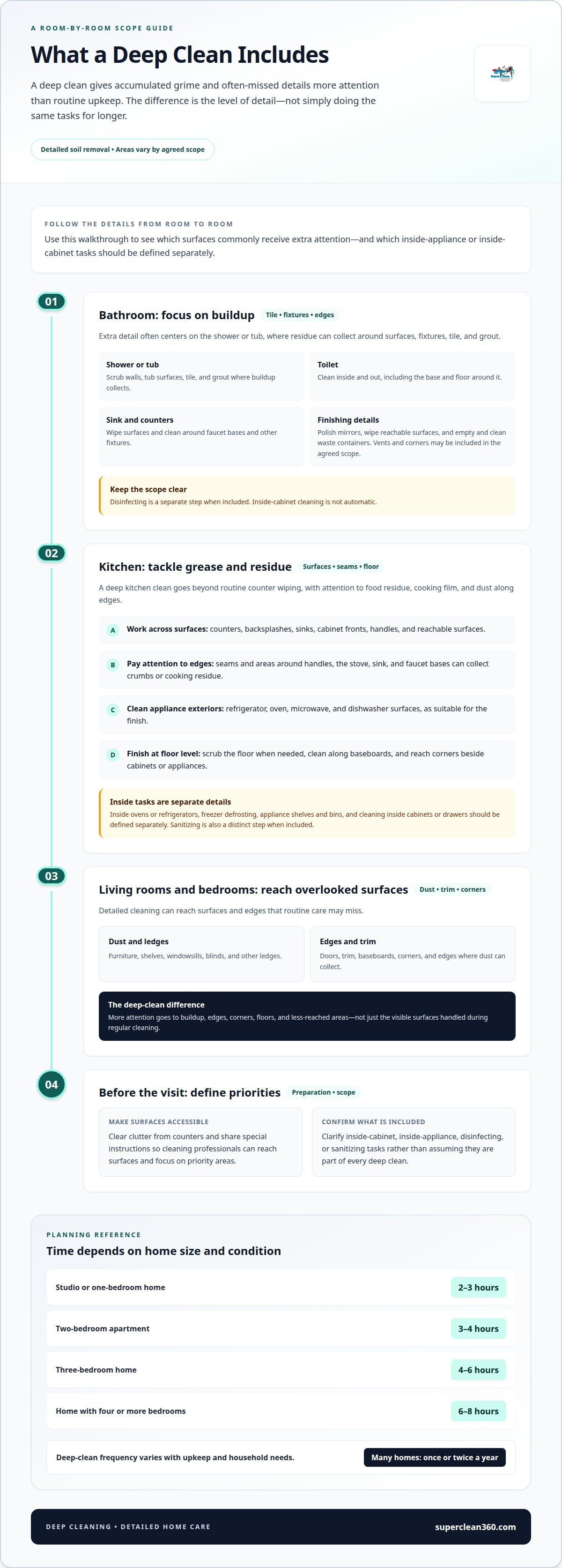
Regular house cleaning maintains visible surfaces through tasks such as dusting, wiping, and vacuuming once a week. A deep clean gives accumulated grime and less-reached areas more attention. In a bathroom, that can mean scrubbing shower walls, tub surfaces, tile, and grout rather than quickly wiping the sink and fixtures. The distinction is the detail and scope, not simply a longer version of the usual routine.
Bathroom deep cleaning typically covers the shower or tub, toilet, sink, counters, and floor. Cleaning professionals scrub tile and grout where buildup collects, then clean around faucet bases and other fixtures. The toilet receives attention inside and out, including the base and the floor around it. Mirrors are polished, reachable surfaces are wiped, and waste containers are emptied and cleaned. Bathroom vents and corners may also receive attention when they’re part of the agreed scope.
Cleaning and disinfecting are related but distinct tasks. A cleaner first removes visible soil, such as residue around a shower fixture or marks beside a toilet. Disinfecting is a separate step, performed with a suitable product when included in the service scope. A detailed clean can also address door handles, light switches, and other high-touch bathroom surfaces. Inside-cabinet cleaning or refrigerator interiors are separate details to define, not automatic parts of every deep clean.
Time depends on home size and condition. A studio or one-bedroom home may take 2-3 hours; a two-bedroom apartment, 3-4 hours; a three-bedroom home, 4-6 hours; and a home with four or more bedrooms, 6-8 hours.
Many homes are deep cleaned once or twice a year, with timing shaped by upkeep and household needs. Before a professional visit, clearing clutter from counters and sharing special instructions helps cleaning professionals access bathroom surfaces and focus on priority areas.
Professional deep cleaning uses professional supplies and equipment, including premium HEPA-filtered vacuums. Products and equipment are selected for the surfaces being cleaned. Practical considerations include product odors and damp floors after washing; cleaning professionals account for room conditions and the work being performed. A deep clean addresses soil and residue, but it isn’t a medical treatment or a substitute for specialized remediation.
For commercial service, a deep clean includes bathrooms, grout, toilet bases, and hidden areas. When comparing services, ask what is included, how floors are handled, and which areas receive extra attention in kitchens, bathrooms, and high-touch areas. Bathroom work can involve scrubbing showers and tubs, cleaning tile and grout areas as needed, sanitizing toilets inside and out, polishing mirrors, wiping counters, and reaching vents and hard-to-reach areas. For a shower drain, the recommended cleaning method is baking soda and vinegar, followed by hot water.
Kitchen cleaning tasks
A deep kitchen clean targets grease, food residue, and dust beyond routine counter wiping. Cleaning professionals work across counters, backsplashes, sinks, cabinet fronts, appliance exteriors, and reachable surfaces. They pay close attention to seams and edges, where crumbs and cooking residue collect. The aim is detailed soil removal, not simply making the room look tidy.
Cabinet doors and drawer fronts are wiped, including handles and the areas around them. Cleaning inside cabinets or drawers is a separate task in many service scopes, so don’t assume it’s included. The backsplash receives focused attention near the stove and sink, where splashes can dry onto tile or other finishes. Faucets and sink fixtures are cleaned around their bases.
Appliances receive exterior cleaning, including the refrigerator, oven, microwave, and dishwasher. Cleaning professionals can wipe fingerprints and cooking film from suitable exterior surfaces. Cleaning inside an oven or refrigerator, defrosting a freezer, or washing appliance shelves and bins is a separate task. The scope should distinguish exterior appliance care from interior cleaning.
Refrigerator interiors can involve more than a quick shelf wipe. A detailed service might cover shelves, drawers, and bins, while removing food or discarding spoiled items requires separate consideration. The oven’s interior also needs a clearly defined scope. These distinctions help keep the requested work precise and prevent inside-appliance tasks from being confused with standard exterior cleaning.
Kitchen cleaning and sanitizing are different steps. First, visible food residue and grease are removed from counters, sink surfaces, and appliance handles. Sanitizing is a separate process, performed where included and appropriate for the surface. Taps may also need descaling to address mineral deposits, while delicate finishes require suitable products and careful handling.
Floors receive more than a quick pass when tracked-in soil or stuck-on grime has accumulated. A deep clean can include scrubbing the floor, cleaning along baseboards, and reaching corners beside cabinets or appliances. Dusting ledges and accessible surfaces helps remove particles before the floor receives its final attention.
Kitchen interiors and appliance details depend on the agreed task list. A focused scope might include cabinet exteriors, counters, fixtures, and floors, while inside-cabinet or inside-appliance cleaning is handled separately. Clear distinctions make it easier to understand exactly which kitchen surfaces receive detailed cleaning.
Living rooms, bedrooms, and common areas
In living rooms and bedrooms, deep cleaning reaches details that routine surface care can overlook. Cleaning professionals dust furniture, shelves, windowsills, blinds, ledges, doors, trim, and baseboards. They pay attention to corners and edges, where dust collects along the floor. The window area may receive focused care, including accessible glass, sills, and tracks.
Furniture placement affects which surfaces are accessible. Where appropriate, cleaning professionals move accessible items to clean exposed floor edges and corners, then vacuum those areas. A crevice tool can help reach narrow gaps beside baseboards or furniture. Upholstered surfaces may also be vacuumed when that task is included in the cleaning scope.
Bedroom furniture receives detailed dusting across headboards, bedside tables, dressers, and open shelves. Cleaning visible surfaces is different from organizing drawers or closets, which are separate tasks. Bed frames and the floor beneath accessible furniture can collect dust, so these areas may receive attention as part of the room’s detailed cleaning.
Bedding requires a clear distinction. Whether removing and washing sheets, pillowcases, or blankets is included depends on the agreed cleaning scope. A mattress can be addressed through surface vacuuming when included, but flipping it or laundering linens shouldn’t be assumed. The agreed scope defines whether bedding tasks are part of the visit.
A child’s room benefits from the same systematic attention to furniture, shelves, window areas, and floors. Cleaning professionals can wipe reachable surfaces such as a desk, dresser, or bed frame, then vacuum around furniture and along the room’s corners. Small items and toys can make surfaces difficult to access, so clearing clutter beforehand helps the team clean the intended areas.
Common areas also include hallways and entryways, where shoes can track soil across floors and door panels collect fingerprints. Detailed cleaning can address reachable ledges, door surfaces, trim, and baseboards, followed by vacuuming or floor cleaning suited to the surface. This is distinct from organizing belongings: deep cleaning targets dust, grime, and residue rather than sorting possessions.
Scope matters in every room. Interior window glass, closet shelves, upholstery, and laundering bedding may be separate tasks rather than automatic inclusions. A precise task list distinguishes detailed cleaning of accessible surfaces from organizing, laundry, or other specialized work.
Recommendations include washing bed sheets and blankets, flipping the mattress, testing and dusting bedroom smoke detectors, changing batteries, and sorting closet belongings into keep, donate, and toss piles, then dusting shelves and cleaning the floor.
Living areas and common-space tasks
Dining and family rooms collect fingerprints, crumbs, and dust around everyday surfaces. A detailed clean can address dining tables, chair backs, sideboards, and reachable cabinet fronts. Cleaning professionals wipe around handles and edges where buildup gathers. Interior cabinet shelves and drawers are separate tasks, not automatic parts of cleaning the exterior.
Ceiling trim, reachable light fixtures, and wall trim can receive careful dusting. Working from higher surfaces downward helps keep loosened dust from settling on freshly cleaned areas. In a family room, this can mean addressing a reachable fixture before cleaning a lower console or table. Delicate finishes call for products suited to their material.
Doors and high-touch points deserve focused attention in shared spaces. Cleaning professionals can wipe door surfaces inside and out, including handles and surrounding panels. Fingerprints near switches and door frames may need a closer pass than open wall areas. This detailed surface work removes visible marks; sorting mail, toys, or other clutter remains a separate organizing task.
Window details can also be defined precisely. A living-space scope may cover accessible sills, tracks, and frame edges, where dust and debris collect. Window glass inside and out can appear on deep-cleaning checklists, but the exact window work needs a clear boundary. Cleaning frames and sills is distinct from washing exterior glass.
Floors in dining and family rooms often hold crumbs beneath table edges and along room boundaries. A thorough service can vacuum accessible floor areas, reach corners, and scrub hard flooring to address stuck-on grime. Furniture is moved only where accessible and appropriate, so a clear path around a dining table helps expose more floor surface.
Regular maintenance, such as dusting and vacuuming, helps limit everyday accumulation between detailed visits. A deep clean goes further by targeting buildup on less frequently addressed surfaces, including trim, frame edges, and reachable fixtures. That difference is useful in shared rooms, where meals, visitors, and daily activity leave distinct marks.
Before service, removing clutter from a dining table or console makes its surface accessible. A defined scope also separates cleaning from organizing and clarifies whether interior cabinets, window glass, or hard-to-reach fixtures are included. These distinctions keep attention on the surfaces and buildup the visit is meant to address.
How Deep Cleaning Differs from Other Cleaning Services
Standard house cleaning maintains a home through recurring upkeep. Deep cleaning gives more attention to detail and accumulated soil. A checklist might specify reachable ceiling fans or floor edges, alongside regular surface care. The practical question, “what does a deep clean include?” is answered by the agreed tasks, not the service label alone. Organizing possessions and laundry are separate household tasks.
Deep-cleaning checklists vary because homes, priorities, and service scopes differ. One checklist may name window tracks; another may focus on particular rooms or surfaces. Carpet vacuuming is different from carpet shampooing, which isn’t automatically part of a household deep clean. A clear checklist makes these distinctions visible before cleaning begins.
Move-in and move-out cleaning is organized around a change in occupancy. An empty or nearly empty home can give cleaning professionals access to areas that furnishings might otherwise block. Deep cleaning, by contrast, can be scheduled while a home is occupied. The choice depends on whether the priority is preparing a property for a transition or addressing detailed cleaning needs.
Airbnb turnover cleaning prepares a short-term rental between guest stays, following the agreed tasks for the changeover. Deep cleaning serves a different purpose: addressing detail that may be outside a regular turnover routine. Hosts may use each service at different points, depending on whether they need guest-changeover preparation or periodic attention to less-routine tasks.
Commercial cleaning is designed for business premises rather than private homes. The facility’s use shapes the scope, whether it’s an office, warehouse, or retail space. A commercial deep clean can focus on detailed work in shared or less-accessible areas. These workplace requirements differ from a residential checklist, even when both involve thorough cleaning.
Choose between services based on the property’s purpose and immediate need. Recurring upkeep suits a regular house-cleaning schedule; a move-related service addresses occupancy transitions; Airbnb turnover supports guest changeovers. A home deep clean focuses on detailed residential cleaning, while commercial cleaning serves a workplace. Comparing the purpose and agreed scope helps identify the fitting service without assuming one checklist covers every situation.
Super Clean 360: Deep Cleaning
Super Clean 360 provides deep cleaning for homes that need more detail than regular upkeep. It can suit a home with accumulated grime, overlooked surfaces, or rooms needing a thorough reset before recurring maintenance begins. The scope focuses on cleaning, not organizing belongings, doing laundry, or automatically cleaning inside every cabinet or appliance.
For a home, “what does a deep clean include?” depends on the agreed tasks and priority areas. A kitchen scope may focus on counters, appliance exteriors, sink fixtures, and floor edges. A bathroom scope may address shower surfaces, tile, grout, toilets, and fixtures. Living spaces can include detailed dusting and attention to reachable surfaces.
Some requests need their own place in the task list. Refrigerator or oven interiors, inside-cabinet cleaning, laundry, and interior window work are examples. Naming these details helps define the planned service and distinguish them from the main cleaning scope.
Choose a service based on the reason for cleaning. Standard House Cleaning supports ongoing upkeep, while Deep Cleaning focuses on accumulated detail. Move-in/Move-out Cleaning suits a change in occupancy. Post Construction House Cleaning addresses cleaning after construction work. Each service responds to a different situation.
For homeowners and renters in Berkeley, Oakland, and Emeryville, a defined task list helps align the service with priority rooms and surfaces. Identifying areas such as grout, cabinet fronts, or floor edges gives cleaning professionals a clearer picture of the requested scope. It also helps clarify separate interior requests.
Super Clean 360 offers a satisfaction guarantee with a free re-clean if agreed tasks aren’t met. The guarantee applies to the tasks agreed for the service, so a clear scope matters from the start. Deep cleaning can provide a detailed starting point, with standard house cleaning available for ongoing maintenance.
To discuss a home deep clean, request an estimate from Super Clean 360.
Frequently Asked Questions
What is often included that people do not expect?
The agreed scope also depends on access and surface condition. A task list might cover reachable areas that routine visits don’t prioritize, but it won’t necessarily include moving heavy furniture or handling items left on surfaces. For example, a crowded console can limit access to its top. Clearing a work area and identifying priorities helps clarify what cleaning professionals can address.
What usually is not included unless requested?
Tasks that involve handling personal belongings or additional labor are commonly outside the basic cleaning scope. Examples include sorting possessions, washing laundry, and cleaning appliance interiors. Name these requests separately rather than assuming they’re included in a “deep clean.” Specify the item and its location, such as the refrigerator interior or a selected cabinet, so the requested work is clear.
What does a professional deep house cleaning include?
A professional service begins with a defined scope that matches the home’s condition and the resident’s priorities. Cleaning professionals use that scope to allocate attention by room and task, rather than treating every home identically. For instance, a household preparing to start recurring maintenance may prioritize different details than one focused on a particular room. The agreed checklist establishes what the visit covers.
What rooms and surfaces are covered in a deep clean?
Coverage is determined by the agreed checklist, not just the number of rooms in a home. A room can include several distinct surfaces and access conditions, so naming the space alone may leave expectations unclear. For example, identify whether the request concerns reachable surfaces, furnishings, or a particular feature. This detail helps define the visit without assuming every surface receives identical treatment.
What tasks are usually excluded from a deep cleaning service?
Work that changes the purpose of the visit or requires separate handling should be treated as a distinct request. Deep cleaning doesn’t automatically include organizing possessions, managing household chores, or specialist restoration. Describe any priority beyond surface cleaning in advance, so the scope distinguishes cleaning from other work. This is especially useful in occupied homes, where personal items can affect access to requested areas.
How is deep cleaning different from standard house cleaning?
The difference is the cleaning objective: standard house cleaning maintains an established routine, while deep cleaning is chosen for a more detailed, less routine visit. A household might schedule a deep clean before beginning recurring service or after regular upkeep has been difficult. The appropriate scope depends on the home’s current condition and the level of detail the resident wants addressed.
What cleaning products and equipment are used for deep cleaning?
Professionals may use professional supplies and HEPA-filtered vacuums, choosing products and equipment suited to the surfaces being cleaned.
Are there health or safety risks during a deep clean?
Product odors and damp floors after washing are practical considerations during a deep clean. Cleaning professionals choose products suited to each surface and account for room conditions and the work being performed.


