

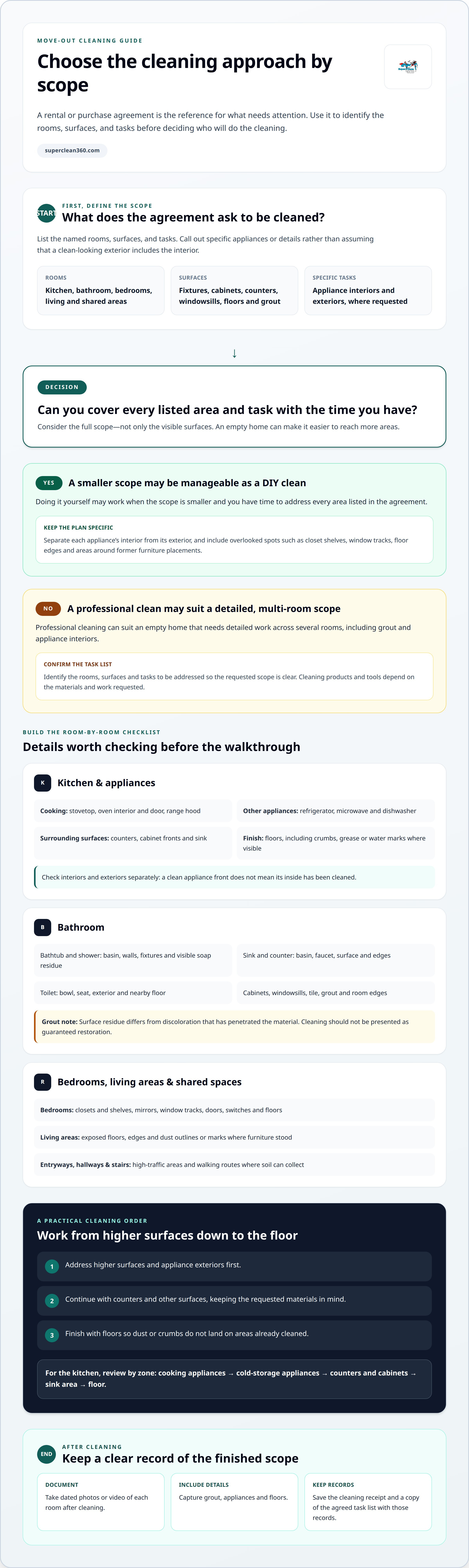
A move-out clean covers details that are easy to miss once the furniture is gone. A complete move out cleaning checklist includes kitchen appliances inside and out, bathroom fixtures and surfaces, bedroom closets and window tracks, plus floors and shared areas such as hallways and stairs. An empty home is easier to clean thoroughly.
Expect more than a quick wipe of visible surfaces. Grease inside the oven, dust on closet shelves, floor marks, and residue around bathroom fixtures all need attention. Use the rental or purchase agreement as the reference for any specific cleaning expectations.
This guide explains what a professional move-out clean typically covers, room by room, including the stovetop, oven, range hood, refrigerator, microwave, and dishwasher. It also covers bedroom, living-area, entryway, and bathroom details to help you understand the work before moving.
Key Takeaways
- Use your rental or purchase agreement to understand the cleaning scope expected for the property.
- Bathroom attention extends beyond fixtures to cabinets, counters, windowsills, floors, and grout.
- Kitchen appliance cleaning can include both interior and exterior surfaces, with each appliance needing its own attention.
- Plan for high-traffic areas and overlooked details in entryways, hallways, stairs, and around former furniture placements.
- Bedroom checks include closets, mirrors, window tracks, doors, switches, and floors.
WHAT’S INCLUDED IN A MOVE-OUT CLEANING?
A professional move-out clean covers the rooms and surfaces named in the rental or purchase agreement. In the bathroom, that can include the bathtub, shower, sink, toilet, cabinets, counters, windowsills, and floors. Grout deserves close attention because soap residue and visible buildup can remain between tiles even when nearby surfaces look clean.
- Bathtub and shower: Clean the basin, walls, fixtures, and visible soap residue.
- Grout and tile: Focus on visible discoloration and buildup between tiles, without assuming every stain can be removed.
- Sink and counter: Clean the basin, faucet, counter surface, and edges where residue collects.
- Toilet: Clean the bowl, seat, exterior, and nearby floor.
- Cabinets and windowsills: Wipe accessible surfaces and remove dust or marks.
- Floor: Finish by cleaning around the toilet, vanity, and room edges.
Work from higher surfaces down to the floor so debris does not land on a freshly cleaned area. Grout condition matters too: surface residue differs from discoloration that has penetrated the material, so cleaning should not be presented as guaranteed restoration.
Is it better to hire professional move-out cleaners or handle the cleaning yourself? Professional cleaning can suit an empty home that needs detailed work across several rooms, including grout and appliance interiors. Doing it yourself may work for a smaller scope if you have time to address every area listed in the agreement.
What should you confirm before arranging a move-out clean? Review the agreed cleaning scope and identify the rooms, surfaces, and tasks to be addressed. This helps clarify what is included in the visit and what may need separate attention.
What supplies and tools do professional move-out cleaners use? Common tools include microfiber cloths, scrub brushes, mops, and vacuums, along with cleaning products suited to the surfaces. The selection depends on the materials and requested work.
How can renters document a professionally cleaned apartment to help protect their security deposit? Take dated photos or video of each room after cleaning, including grout, appliances, and floors. Keep the cleaning receipt and a copy of the agreed task list with those records.
A room-by-room move out cleaning checklist helps connect the visible finish to the agreement’s details. For a single visit, a one-time house cleaning service can address a defined cleaning scope.
Kitchen and appliance cleaning
A kitchen move-out clean covers appliance interiors and exteriors, as well as nearby surfaces. Key appliances include the stovetop, oven, range hood, refrigerator, microwave, and dishwasher. Cleaning visible fronts and accessible interiors helps address residue that a quick wipe can leave behind.
A practical checklist separates appliances from surrounding surfaces:
- Stovetop: Clean the cooking surface and accessible surrounding edges because grease can collect around burners.
- Oven: Address the interior, door, and exterior so baked-on residue and fingerprints receive attention.
- Range hood: Clean the hood’s visible surfaces because airborne cooking residue can settle there.
- Refrigerator: Clean accessible interior and exterior surfaces, including shelves and door fronts, where spills or fingerprints may remain.
- Microwave: Clean the inside and outside, including the door and handle, to remove food splashes and touch marks.
- Dishwasher: Clean accessible interior and exterior surfaces, including the front and handle, where fingerprints often show.
Kitchen surfaces need attention alongside appliances. Counters, cabinet fronts, sinks, and floors can hold crumbs, grease, or water marks. Cleaning professionals consider the material and visible soil when choosing an approach. A delicate cabinet finish, for example, needs different care from a hard countertop. The aim is to clean each surface appropriately, not treat every material the same way.
Order matters. Cleaning professionals can address higher surfaces and appliance exteriors before finishing counters and floors. This helps prevent dust or crumbs from falling onto areas already cleaned. The task list should distinguish an appliance’s exterior from its interior: a polished refrigerator door does not mean its shelves have been cleaned, and a clean oven front does not cover the oven cavity.
The rental or purchase agreement is the reference for the requested scope. If it names a particular appliance or surface, include that detail in the cleaning plan. Condition and access also affect the work: an empty refrigerator allows access to more interior surfaces than one holding food or containers.
Before the final walkthrough, review the kitchen checklist by zone: cooking appliances, cold-storage appliances, counters and cabinets, sink area, then floor. This makes missed areas easier to spot without assuming every kitchen has the same equipment. A kitchen with a microwave but no dishwasher needs a different appliance list from one with both.
Living area and common area cleaning
Living rooms, entryways, hallways, and stairs need attention beyond open floor space. Furniture can leave dust outlines or marks where its legs rested, while foot traffic concentrates soil near doorways and along walking routes. A clear, room-by-room scope helps ensure shared areas receive attention, not just the kitchen and bathroom.
A professional checklist can include these visible, checkable areas:
- Living-room floors: Clean exposed flooring and edges where furniture stood, because dust and debris can collect around former furniture placements.
- Baseboards and corners: Address visible dust along room edges, where a quick pass through the center may miss it.
- Entryway floor: Clean the area just inside the entrance, where outdoor dirt often gathers.
- Hallway surfaces: Remove visible dust and marks from accessible surfaces, especially along the route between rooms.
- Stairs and landings: Clean each tread and landing, since traffic can leave debris across more than the bottom step.
- Doors and handles: Wipe visible marks from commonly touched areas, such as the entry door handle.
- Furniture outlines: Inspect the floor beneath former table or sofa positions, where a difference in dust or finish may stand out.
The sequence matters when cleaning multiple rooms. Working from higher surfaces toward the floor helps keep loosened dust off finished flooring. In a two-story home, work can begin upstairs, then continue down the stairs and through the entryway. This approach also makes it easier to notice a missed landing or corridor.
Scope errors often start with vague descriptions. “Clean common areas” may not clarify whether stairs, entryways, or marks from furniture are included. A useful task list names each area and distinguishes routine surface cleaning from stain removal or repairs. These are different tasks: a cleaning checklist should not imply that cleaning can fix damaged flooring or permanent marks.
Before scheduling, compare the requested rooms with the written task scope. Look for specific terms such as “hallway floors,” “stairs,” and “living-room surfaces,” rather than relying on a broad label. Note whether furniture will remain, since access affects which floor areas can be reached. An empty room exposes more of the floor, while furniture limits access beneath it.
A final walkthrough can follow the cleaning route: living room, hallway, stairs, landing, and entryway. This simple sequence makes omissions easier to identify and keeps shared spaces from becoming an afterthought.
Bedroom Cleaning Checklist for Professional Move-Out Cleaning
A bedroom clean covers more than visible floor space. Professional cleaning includes closet interiors and exteriors, mirrors, windowsills, window tracks, doors, light switches, and floors. These details matter because dust and fingerprints can remain in less visible areas after furniture and belongings are removed.
A clear checklist keeps the room’s surfaces distinct and easy to review:
- Closet interiors: Clean accessible shelves, rods, and floor areas, where dust may collect behind stored items.
- Closet exteriors: Wipe doors and handles, which can show fingerprints near the points of contact.
- Mirrors: Clean the glass and surrounding edges, where smudges and dust can remain visible.
- Windowsills and tracks: Remove accessible dust and debris from the sill and track, not just the glass.
- Doors and handles: Address visible marks on the door surface and around frequently touched hardware.
- Light switches: Wipe the plate and nearby marks carefully, since switches are touched often.
- Floors: Clean the open floor and accessible edges, including areas exposed after furniture is removed.
Check closets separately from the rest of the bedroom. A clean floor does not show whether shelves or a closet rod still hold dust. Empty closets give cleaning professionals access to more surfaces. Belongings can limit access to shelves and corners. The same applies to built-in drawers or other storage areas included in the agreed scope.
Include window tracks as well as windowsills. Dust can settle inside the track, beyond the reach of a wipe across the sill. Cleaning professionals address accessible track areas and visible debris. Window glass is a separate surface, so a clean sill does not mean the glass has also been cleaned.
Doors, handles, and switches form another distinct group. A door may look clean at a glance but have marks near its handle. Switch plates can also collect fingerprints. Checking each item separately makes the bedroom task list precise without assuming every mark is removable or that cleaning repairs damaged paint.
Review the floor after cleaning higher surfaces. Dust from a closet shelf or windowsill can fall during the work, so finishing the floor afterward helps avoid repeating that step. In an empty bedroom, cleaning professionals can reach more exposed flooring and room edges. A bed or dresser left in place may limit access.
For a useful final review, move from closet interiors to exterior surfaces, then mirrors, windowsills and tracks, doors, switches, and floors. This order makes omissions easier to spot. A room-specific task list also clarifies which storage surfaces are included, especially when several bedrooms have different closet layouts.
What a move-out clean includes
A move-out clean covers the agreed rooms and surfaces, not just visible floors. Use the rental or purchase agreement to define the requested work. A useful scope names specific areas, such as appliance interiors, closet shelves, bathroom grout, and hallway floors. This prevents a broad phrase like “clean the home” from obscuring important tasks.
Scope depends on the property’s layout, condition, and access. An empty home allows cleaning professionals to reach more exposed surfaces. Furniture or stored belongings can limit access beneath or behind them. Cleaning is generally more efficient after the home is vacated, when rooms and appliances are easier to reach.
A complete task plan typically groups work by room and surface:
- Kitchen: Include appliance interiors and exteriors, counters, cabinets, sink surfaces, and floors.
- Bathroom: List the tub, shower, sink, toilet, cabinets, counters, windowsills, floors, and visible grout buildup.
- Bedrooms: Specify closet interiors and exteriors, mirrors, windowsills, tracks, doors, switches, and floors.
- Living and shared areas: Name entryways, hallways, stairs, floors, and visible marks near former furniture locations.
These details distinguish move-out cleaning from routine upkeep. Standard house cleaning generally addresses recurring household surfaces, while a move-out scope is organized around the emptying property and its handover. Deep cleaning can address accumulated soil in more detailed areas. The task list should still match the agreement and the property’s condition.
Cleaning professionals can work from higher surfaces toward floors so loosened dust does not settle on finished flooring. In a two-story home, starting upstairs can keep cleaned lower areas from collecting debris during the remaining work. The plan should identify areas needing extra attention, such as a heavily used entryway or visible residue around a kitchen appliance.
A clear scope separates cleaning from repairs or restoration. Cleaning can address accessible dirt and residue, but it does not restore damaged paint, flooring, or permanently discolored material. Naming the requested surfaces makes the work easier to review and reduces confusion about what the clean covers.
For a property handover, a room-by-room written scope gives cleaning professionals a practical sequence and helps keep the final review focused on the same areas.
The kitchen move-out checklist recommends cleaning appliance interiors and exteriors, including the stovetop, oven, range hood, refrigerator, microwave, and dishwasher. Name each item in the kitchen scope to make the requested appliance coverage clear.
Super Clean 360: Move-in/Move-out Cleaning
Super Clean 360 offers move-in/move-out cleaning for renters, homeowners, landlords, and property managers preparing a home for its next occupant. It’s a useful option when the property is vacant and the agreed scope includes several rooms, appliances, and detail areas. A written task list helps align the cleaning with the property’s needs and handover expectations.
This service differs from standard house cleaning, which focuses on routine upkeep, and deep cleaning, which addresses detailed buildup. For a move, the work is organized around the spaces and surfaces identified for the transition. Post-construction house cleaning addresses a different situation, following renovation or building work.
Share the rooms and tasks that matter for your move, such as closet interiors, appliance surfaces, or shared areas. Contact Super Clean 360 to discuss move-in/move-out cleaning and request an estimate.
Set Up a Clear Move-Out Plan
A room-by-room move out cleaning checklist is most useful when it becomes a clear plan for the property. The agreement, room layout, and condition of accessible surfaces help define the scope. A list can guide the conversation, but it is not a universal standard for every home.
Before arranging the clean, gather the details that shape the work: which rooms will be empty, whether appliances will be accessible, and which areas need particular attention. Sharing those priorities makes the requested tasks easier to understand and gives the cleaning team a practical basis for organizing the visit, especially when move-out timing and access depend on other parts of the relocation.
A well-defined scope turns a demanding transition into a more manageable next step. If you’re preparing a home in Berkeley or Oakland, Super Clean 360 can discuss the cleaning needs for your move. You can decide which tasks matter most and request an estimate without assuming that every property requires the same service.
Frequently Asked Questions
What should professional move-out cleaning include in every room?
Define each room’s scope by naming the surfaces to clean and any access limits. The details vary: a furnished home presents different access from an empty one, while built-in storage may need separate attention. Agreeing on the scope before the appointment helps distinguish included cleaning from repairs, disposal, or moving belongings.
What are the step-by-step kitchen tasks in a professional move-out cleaning?
The kitchen process starts by identifying which appliances and surfaces are accessible and included in the agreed scope. Cleaning professionals consider each surface’s condition and material, since a finished cabinet front and a metal appliance exterior may need different treatment. A final review against the task list clarifies what was completed and whether access restrictions affected any items.
What are the step-by-step bathroom tasks in a professional move-out cleaning?
Cleaning professionals first assess bathroom materials and visible residue, since soap film and mineral deposits can require different treatment. They choose an approach suited to the surface, then review for remaining visible soil. This matters for delicate finishes and older grout, where aggressive scrubbing may cause damage. The agreed scope should separate routine cleaning from repair or replacement work.
How clean does a rental need to be before moving out?
Use the lease and written move-out instructions to understand the requested condition. Requirements depend on the agreement, so do not assume a single standard applies to every rental. Compare the stated expectations with move-in records and photos. This can help distinguish cleaning concerns from pre-existing damage or ordinary deterioration.
How much does professional move-out cleaning cost in the United States?
There is no single price for professional move-out cleaning across the United States. The estimate depends on the property, its condition, the requested scope, and access to rooms or surfaces. For Super Clean 360, pricing depends on the case and is provided after an estimate request. A clear description of the home and requested tasks helps define the estimate.
Which areas do professional cleaners commonly address that tenants may miss before moving out?
Details beyond the main room surfaces can be overlooked, including door jambs, cabinet interiors, built-in shelf tops, and floors beneath removable mats. These areas may need separate attention or access, so make their inclusion clear in the task scope. Belongings left in cabinets or on shelves can prevent those surfaces from being fully cleaned during the appointment.


