

A clean handoff starts by scheduling cleanup after construction is complete. For final construction clean up in Berkeley, timing depends on the project’s readiness, scope, and access plan. The work should take place after building or remodeling ends and before furniture returns or the space is occupied.
It’s understandable to want a clear date when contractors are wrapping up and move-in plans are underway. Dust can settle on floors, window sills, and other surfaces, so timing the cleanup around the final work matters as much as the cleaning itself.
This guide explains what affects scheduling, what HEPA-filtered vacuuming and detailed dust removal involve, and how to coordinate cleaning with contractors and building access requirements. It also explains how a home’s needs differ from a business’s, helping you plan the final clean with fewer loose ends.
Key Takeaways
- Plan post-construction cleaning after building or remodeling work is complete and before furniture returns or the space is occupied.
- Project scope, layout, and access conditions shape the cleaning schedule, so share those details when arranging service.
- HEPA vacuuming helps address settled dust on floors, sills, and vents as part of a thorough cleanup.
- Coordinate access, service-elevator timing, and hallway protection with contractors or building management before cleaning begins.
- Choose a cleaning scope that fits the property: post-construction cleanup differs from routine house cleaning or a move-in clean.
How fast can you arrive for post-construction and specialty cleaning in Berkeley?
There’s no single arrival window for every Berkeley project. Scheduling depends on the cleanup scope, property readiness, and access. Share the expected completion date, address, and building restrictions when arranging service with Super Clean 360. Final construction clean up in Berkeley works best after dust-producing tasks have stopped, so the agreed work can focus on the finished space.
Access affects the plan, especially in the Berkeley Hills. Steep, narrow driveways and shared roads can require equipment to be staged outside, with supplies then carried indoors. Note parking instructions, stairs, locked gates, and elevator access. For a condominium near downtown, include the service-elevator schedule and the route from the loading area.
For projects in Berkeley, Oakland, and Emeryville, provide the exact address rather than a broad East Bay location. Neighboring communities like Albany, El Cerrito, and Richmond may also be relevant to regional scheduling and crew dispatching. Include whether the property is occupied and which rooms are accessible, since these details shape the work sequence.
Compare cleaning estimates by matching the scope line by line. List rooms, floors, sills, vents, walls, and debris handling, as well as access assumptions and exclusions. One estimate might cover open rooms, while another may include cabinetry, stairwells, or hard-to-reach ledges. A shared task list makes the proposed work easier to compare.
Are Berkeley construction cleanup companies licensed and insured? The phrase “construction cleanup” alone does not establish a company’s license or insurance status. Those credentials are specific to each business, not a standard feature of the service category.
What permits or disposal rules apply to construction debris in Berkeley? Surface cleaning and construction-waste hauling are separate tasks. Coordinate debris handling through the contractor’s project plan. Permit questions relate to the work or disposal activity, not to a universal cleaning checklist.
What factors affect final construction cleanup pricing? Pricing depends on the project and is provided after an estimate request. Key factors include square footage, design intricacy, surface count, debris levels, and property access. Compare written task lists rather than totals alone.
Prepare the property by clearing tools and personal belongings from the cleaning path. Identify rooms that should remain untouched, delicate finishes, and locations where debris remains. A room-by-room note helps the cleaning team understand the intended scope before starting.
How long does final construction cleanup take for a typical home? There’s no single duration that fits every home. Square footage and design intricacy affect the schedule; detailed built-ins or multiple levels add surfaces and transitions.
What safety risks and precautions are involved in post-construction cleaning? Sites may contain sharp scraps, loose debris, exposed wiring, or unfinished surfaces. Keep residents, pets, and unrelated trades away from active work areas, and leave electrical or structural concerns to the appropriate construction professional.
- Share the property address, completion timing, and access instructions.
- Compare estimates against the same room and surface list.
- Keep construction-waste handling distinct from surface cleaning.
HEPA vacuuming of floors, sills, and vents
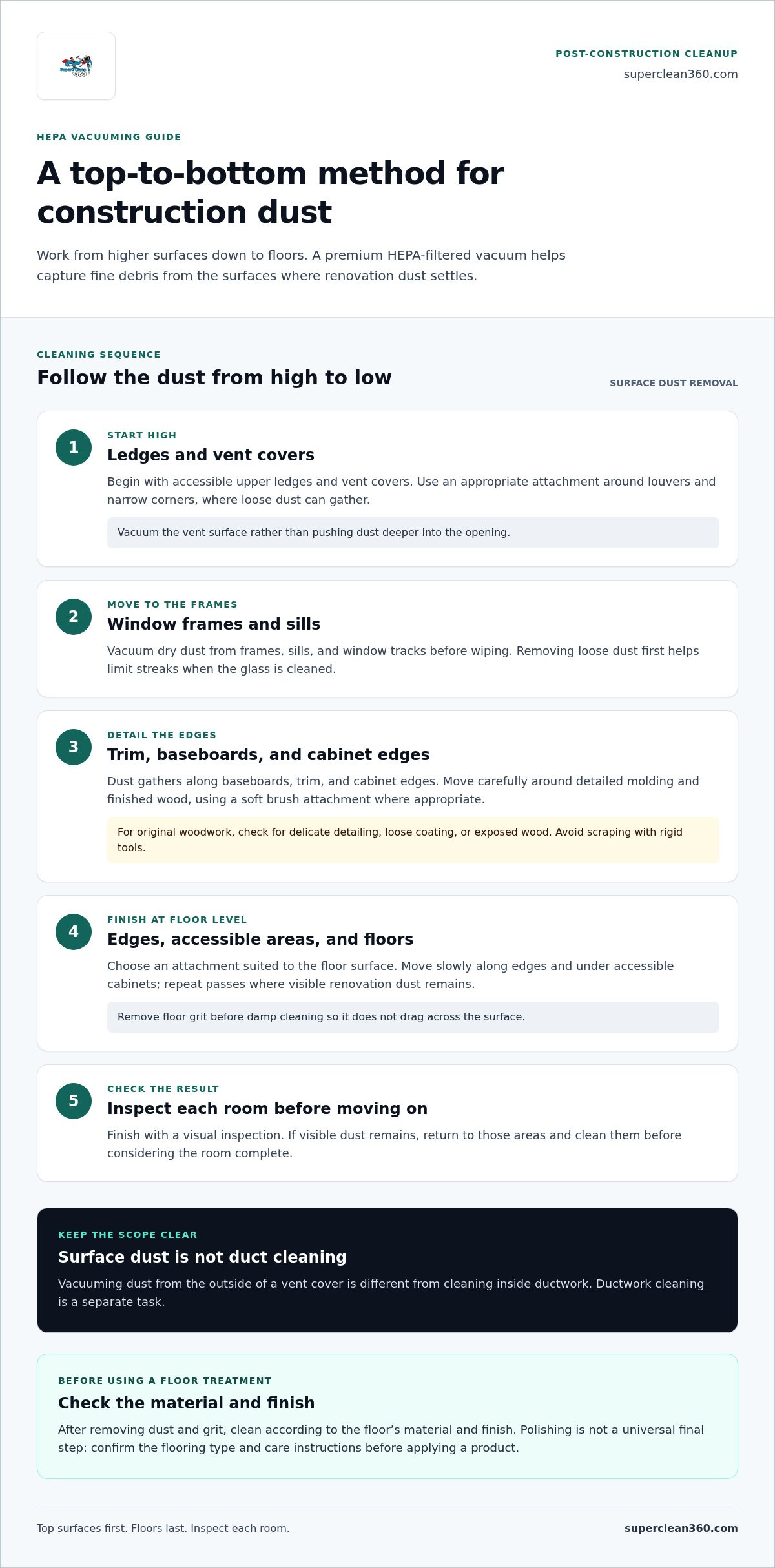
Renovation dust settles on more than open floors. Fine particles collect along window sills, baseboards, vent covers, trim, and cabinet edges. A premium HEPA-filtered vacuum helps capture fine debris during cleanup. Work from higher surfaces toward lower ones, then vacuum floors after removing dust from ledges.
Start with accessible upper ledges and vent covers, then move to window frames and sills. Use an appropriate attachment around louvers and narrow corners, where loose dust can gather. Vacuum vent surfaces rather than pushing dust deeper into openings. Cleaning inside ductwork is separate from removing surface dust around a vent.
For floors, select an attachment suited to the surface. A hard-floor tool can lift dust without scattering it with a rotating brush, while a brush attachment may suit some carpeted areas. Move slowly along edges and under accessible cabinets. Repeat passes where visible renovation dust remains, especially near doorways and transition strips.
Original Berkeley woodwork calls for a light touch. Before cleaning a historic floor or painted trim, identify its finish and check for loose coating, exposed wood, or delicate detailing. Use a soft brush attachment and avoid scraping with rigid tools. For carved moldings, vacuum gently along the grooves instead of pressing into the finish.
Floors, walls, and windows need different methods. Vacuum loose dust from floors and window tracks before damp wiping, so grit doesn’t drag across the surface. Wipe walls with a suitable clean cloth, working carefully around fresh paint. On windows, remove dry dust from frames and tracks before cleaning the glass to limit streaks.
Prepare floors before polishing. First remove grit, then clean according to the floor’s material and finish. Polishing isn’t a universal final step: wood, tile, and other surfaces need different treatments, and some finishes shouldn’t receive polish. Confirm the flooring type and care instructions before applying a product.
- Work from upper ledges toward floors to avoid recontaminating cleaned areas.
- Use gentle attachments around original trim, detailed molding, and finished wood.
- Vacuum window tracks before wiping, and remove floor grit before damp cleaning.
- Check the flooring material before considering a polish or other finish treatment.
Finish with a visual inspection of each room. Look across sills, trim, and floor edges for residue that catches the light. Check window tracks and corners where a vacuum attachment may not reach fully. If dust remains on an accessible surface, address it before furniture or equipment returns.
Construction dust removal
Construction dust varies with the materials and work performed. Plaster and lath create finer particulate than gypsum board during renovation. That difference affects where residue settles and how carefully surfaces need attention. A room with plaster repairs may show dust along trim, shelving, and door frames, even after visible debris is cleared.
Begin by identifying the work areas and materials left behind. Separate loose debris, such as small scraps, from settled dust on surfaces. Remove accessible debris first, then work through the room from upper ledges toward lower surfaces. This sequence helps keep dust from falling onto areas already cleaned.
Check less obvious collection points after sanding or demolition. Door tops, cabinet interiors, baseboards, window tracks, and light fixtures can hold fine residue. Run a clean cloth across a dark shelf to reveal any remaining dust film. Use a suitable attachment or cloth for each surface, especially around delicate finishes.
Dust can travel beyond the room where work took place. Inspect nearby hallways, adjoining rooms, and the route used to carry materials. In a Berkeley home, an open doorway between a renovated kitchen and living room can let residue settle in both spaces. Include those connected areas in the cleanup plan.
Use a deliberate room-by-room sequence rather than moving randomly between surfaces. Start at the point farthest from the exit, then finish near the doorway. Clean ledges and fixtures before furniture-height surfaces, and address floors last. If another trade returns to sand, cut, or drill, repeat the affected cleaning steps afterward.
- Identify whether the renovation involved plaster, lath, gypsum board, or several materials.
- Remove loose scraps before treating fine dust on surfaces.
- Inspect nearby rooms and hallways, not only the active work zone.
- Revisit surfaces affected by later sanding, cutting, or drilling.
A final visual inspection can uncover missed residue before furniture returns. Look across shelves and trim at an angle, where fine dust may catch the light. Check window-track corners and the tops of baseboards by hand or with a clean cloth. Mark any remaining areas, then clean them before closing the room.
For a Berkeley renovation, the cleanup scope should reflect both the materials and the affected areas. Plaster and lath dust may require attention beyond the immediate repair zone, while gypsum-board work can leave visible residue around cutting and sanding areas. A clear task list distinguishes surface dust removal from debris hauling or unfinished construction work.
Post-construction cleanup includes removing dust, clearing debris, and cleaning floors, walls, windows, and HVAC systems. Treat these as connected parts of the final pass: after overhead and wall surfaces are addressed, check floors for fallen residue, then review windows and HVAC areas for dust or debris. Keep the cleanup sequence consistent so material removed from one area does not settle on a surface already finished.
On Berkeley Hills jobs, steep, narrow private driveways and shared access roads may require cleaning equipment and debris removal to be staged on the street and carried in by hand. Plan the route and staging before starting, keeping the carry path clear and accounting for moving supplies and collected debris. Once equipment is in place, keep it organized near the work area and avoid tracking residue back through cleaned rooms.
Coordination with contractors and HOAs
Set the cleaning window after the final construction tasks are complete. A painter returning for touch-ups can disturb dust on freshly cleaned floors. Ask the general contractor to identify remaining work, expected access needs, and areas ready for cleaning. For a Berkeley kitchen renovation, confirm cabinet installation and countertop work are finished before scheduling detailed surface cleaning.
Choose one point of contact for the property. In a Berkeley condominium, that person might be the owner, property manager, or general contractor. Share the cleaning date, arrival instructions, and work areas with everyone involved. A short written plan can prevent cleaning professionals from entering a room where a contractor is still installing fixtures.
For Berkeley condo and multi-unit jobs, HOA rules may set service-elevator hours or require protective floor covering in common hallways during debris removal. Get those details from building management before selecting the cleaning window. Include elevator reservations, hallway protection, loading access, and required entry procedures in the site plan.
Access planning should cover the route from the entrance to the work area. Note locked doors, stairs, elevator access, and where equipment can be staged. In a multi-story building, confirm whether the elevator connects the lobby directly to the unit. If the service elevator is available only during set hours, align the cleaning schedule with that window.
Agree on the work boundary before cleaning begins. Mark rooms that are ready, rooms still under construction, and surfaces needing special care. For example, a contractor may finish a bathroom while hallway painting continues. Identifying each zone helps prevent cleaning from overlapping with active work.
Clarify who handles construction debris and who removes dust from finished surfaces. A cleaning plan can list accessible debris separately from bulky materials or contractor tools. Keep work supplies out of the cleaning path, and ask the construction lead to remove equipment before the final pass. This makes room access easier to manage.
Use a simple handoff sequence to reduce rework:
- Confirm completed work and any remaining contractor visits.
- Share HOA access rules and elevator timing with the cleaning team.
- Identify protected finishes, restricted rooms, and debris locations.
- Walk through the cleaned areas with the designated property contact.
If a contractor returns after cleaning, identify which rooms or surfaces may need another pass. A focused handoff, such as noting fresh sanding in one bedroom, keeps the next step clear. Record unresolved construction tasks separately from cleaning observations so each item reaches the right person.
Post-construction cleaning for homes and businesses
Schedule post-construction cleaning after building, remodeling, or renovation work ends, but before furniture returns or people occupy the space. The task list should reflect the property’s use, layout, and remaining dust or debris.
Residential and Business Cleanup
In a Berkeley home, cleanup may cover bedrooms, kitchens, bathrooms, stairs, and shared living areas. A business project may involve offices, reception areas, meeting rooms, or customer-facing floors. Both settings need dust and debris removed, with floors, walls, windows, and other agreed surfaces addressed according to the project scope.
Consider room function, surface types, and access needs before defining the work. A remodeled kitchen can require attention around cabinets and counters; an office renovation may leave dust along partitions and workstations. Square footage and design intricacy affect the cleanup duration, so a compact, detailed interior can need a different plan than a larger open room.
Berkeley Cleanup Company Options
Berkeley cleaning firms that specifically provide post-construction cleanup are the relevant option for this work. Super Clean 360 offers post-construction house cleaning for residential projects. Compare service descriptions by checking whether they address construction dust, debris, floors, walls, windows, and the rooms affected by work.
Ask for a written scope that separates cleaning from unfinished construction and debris hauling. A clear list can identify included rooms, detailed surfaces, and areas that remain inaccessible. This helps homeowners, property managers, and business owners compare proposals based on the work itself, rather than a broad service label.
Before setting the cleaning date, walk through the property with the contractor or site contact. Identify completed work, remaining tasks, delicate finishes, and rooms that should stay closed. A Berkeley rental renovation, for example, may have a finished kitchen while contractors still need access to a hallway. Marking those boundaries helps avoid cleaning surfaces before nearby work ends.
Prepare the space by removing tools, materials, and personal belongings from the cleaning path. Keep access clear to the entrance, stairs, and rooms included in the scope. For a business, decide whether desks, equipment, or stored supplies will remain in place. Those choices affect which surfaces can be reached and how the work is sequenced.
Use the final walkthrough to distinguish cleaning items from repairs. Dust on a sill belongs on the cleanup list; chipped paint or an unfinished fixture belongs with the contractor. Note each observation by room, then share the list with the appropriate contact before occupancy or reopening.
The duration of post-construction cleanup depends on factors including the space’s square footage and design intricacy. For planning, describe the areas that need attention and discuss timing in light of the layout as well as the size of the space. Avoid treating a broad estimate as a fixed schedule when the project includes a detailed interior or varied rooms.
Keep the expected duration tied to the agreed scope, and revisit it if the rooms or surfaces to be cleaned change. A clear understanding of the space and its design helps set expectations for residential and business projects. Confirm timing before arranging access or occupancy, so the cleaning plan fits the completed work and the property’s intended use.
Super Clean 360: Standard House Cleaning
Super Clean 360 offers Post Construction House Cleaning for Berkeley properties after renovation work is complete. It addresses construction-related dust and debris before the home or business returns to regular use.
Once the project cleanup is finished, choose the next service based on what the space needs. Standard house cleaning supports routine upkeep, while deep cleaning suits a more detailed reset. Move-in or move-out cleaning is designed for a transition between occupants, rather than ongoing maintenance. These services have distinct purposes, so describe the property’s condition and your goal when requesting an estimate.
For a Berkeley home that needs construction residue addressed, start with post-construction cleaning. For a space that’s already settled, select the service matching its current condition. Contact Super Clean 360 to discuss the right cleaning for your property.
Make the Space Ready for Its Next Chapter
Final construction clean up in Berkeley is one step in returning a renovated property to daily use. Next, decide how the space will be occupied and cared for. A homeowner may be preparing to unpack, while a property manager may be coordinating access for incoming residents. Business owners may be planning around staff, equipment, or reopening needs.
Before the cleaning visit, set a clear handoff: confirm construction work is finished, identify any areas that still need attention, and decide when furniture or equipment will return. That gives everyone involved a shared picture of what “ready” means for the property.
When you’re ready to discuss post-construction cleaning for your Berkeley property, share its condition and how you plan to use the space.
With a clear plan, you can move from construction work toward making the space yours again.
Frequently Asked Questions
What does a final clean after renovation actually include?
A final renovation clean focuses on the finish work left by construction, with tasks defined for the property and project. For example, a homeowner might include wiping cabinet fronts, cleaning fixture surfaces, and clearing residue from accessible shelves. Review each room with the contractor’s punch list nearby. Cleaning addresses surface condition, while repairs, paint touch-ups, and unfinished installations remain construction work.
What does final construction cleanup include?
Final construction cleanup can cover agreed cleaning tasks across the renovated space, such as removing surface dust, cleaning floors and windows, and addressing accessible fixtures. The precise scope depends on the property and work completed. For a Berkeley office, clarify whether reception, private offices, and shared areas are included. Identify any materials or areas needing separate handling so the cleaning scope stays distinct from construction debris removal.


