

A clean-looking room can still hold dust and grime in places routine cleaning may miss. The benefits of using deep cleaning services include more detailed attention to neglected areas, care for home surfaces, and less cleaning work for you to manage. Deep cleaning goes beyond everyday tasks such as vacuuming, dusting, and wiping large surfaces.
Regular cleaning supports day-to-day upkeep, but may not reach buildup behind appliances, along baseboards, or in grout. This article explains how a professional deep clean differs from routine service, how it can help protect home surfaces, and why handing off intensive cleaning can free up time. You’ll also learn when a deeper clean may be useful, from a seasonal refresh to preparing for a move, and how to decide whether it suits your home.
Key Takeaways
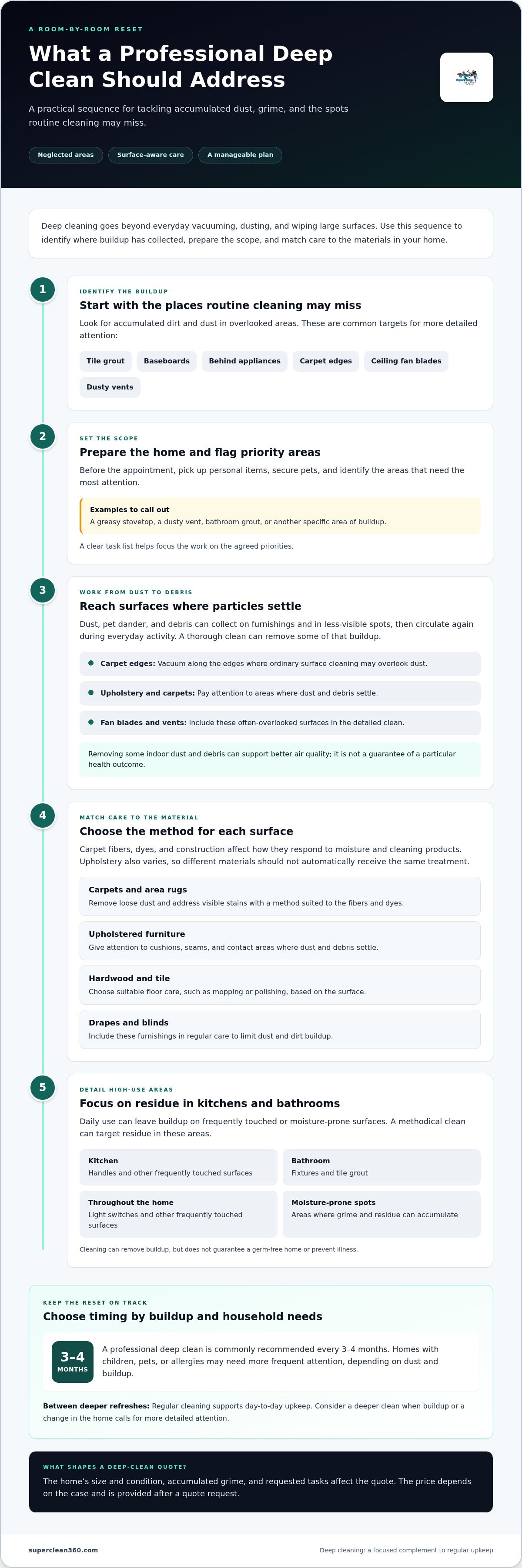
- Deep cleaning reaches neglected areas that routine upkeep may miss, including grout, baseboards, and spaces behind appliances.
- Removing accumulated dust and debris from home surfaces can help limit buildup that affects carpets, floors, and furniture.
- A more orderly home can ease the mental load of cleaning and leave more time for priorities outside household chores.
- Use regular cleaning for ongoing upkeep and consider deep cleaning when buildup or a change in the home calls for more detailed attention.
- Choose the cleaning approach according to the home’s current condition and the areas that need the most attention.
What Are the Benefits of a Professional Deep Clean?
A professional deep clean targets accumulated dirt, grime, and bacteria in places routine cleaning may miss. It can address neglected surfaces and dust buildup while freeing residents from some intensive household tasks. In practical terms, deep cleaning services provide more detailed attention to areas routine upkeep may not reach.
Indoor Air Quality and Allergen Removal
Allergen removal means clearing dust, pet dander, and debris from places where they collect indoors. These particles can settle on upholstery, carpets, vents, and other surfaces, then circulate again during everyday activity. A thorough clean can remove some of that buildup and support better air quality. For example, vacuuming carpet edges and dusting ceiling fan blades address spots that ordinary surface cleaning may overlook.
Reducing Germs and Bacteria
Deep cleaning reduces grime and targets bacteria on frequently touched or moisture-prone surfaces. Kitchen handles, light switches, bathroom fixtures, and tile grout can collect residue through daily use. Bathrooms and kitchens also have moisture and humidity, conditions in which mold, mildew, and bacteria can thrive. Cleaning these areas methodically helps remove buildup; it doesn’t guarantee a germ-free home or prevent illness.
What factors affect the cost of deep cleaning services? The home’s size and condition, accumulated grime, and requested tasks affect the quote. The price depends on the case and is provided after a quote request.
How often should a home be deep cleaned? A professional deep cleaning is commonly recommended every 3-4 months. Homes with children, pets, or allergies may benefit from more frequent attention, depending on dust and buildup.
What should homeowners do to prepare for a deep cleaning appointment? Pick up personal items, secure pets, and identify priority areas, such as a greasy stovetop or dusty vent. This helps the cleaning team focus on the agreed tasks.
Are deep cleaning services safe for children, pets, and people with allergies? Safety depends on the products and processes used. The Centers for Disease Control and Prevention notes that some cleaning processes can irritate the eyes, nose, throat, and skin, and may aggravate asthma. Share relevant sensitivities before work begins.
How can you choose a reputable deep cleaning company near you? Look for a clear task list, an explanation of cleaning methods, and transparent insurance information. Confirm that the proposed scope addresses priorities such as dusty vents or bathroom grout. For homes needing focused attention, one-time house cleaning can be a useful option as part of a broader reset.
Protecting carpets, furniture, and other home surfaces
Dust and grit can act like fine abrasives on frequently used surfaces. Particles can settle into carpet and upholstery fibers, while dirt on hardwood floors may contribute to wear and make the finish look dull. Removing accumulated buildup with an appropriate cleaning method helps maintain surfaces.
Different materials need different methods. Carpet and rug fibers, dyes, and construction affect how they respond to moisture and cleaning products. Identifying those details before treatment helps avoid using an unsuitable approach. Upholstery also varies: a fabric sofa, leather chair, and delicate drapes shouldn’t automatically receive the same treatment. Cleaning properly means matching the method to the material, not simply scrubbing harder.
Floor care can include HEPA-filter vacuuming, stain treatment for carpets or rugs, and mopping. Hardwood or tile may call for polishing, depending on the flooring type. These tasks address different forms of buildup, from loose debris to marks and residue. Routine attention to carpets, rugs, and wooden floors can help them look fresh and last longer, while a deeper clean can address accumulated dirt more thoroughly.
- Carpets and area rugs: Remove loose dust and address visible stains with a method suited to their fibers and dyes.
- Upholstered furniture: Pay attention to cushions, seams, and contact areas where dust and debris settle.
- Hardwood and tile: Choose floor care based on the surface, using suitable mopping or polishing methods.
- Drapes and blinds: Include these furnishings in regular care to limit dust and dirt buildup.
A clean, well-presented home can make a positive impression on prospective buyers, but cleaning alone does not determine market value or sale price. Visible grime on floors, furniture, or fixtures can distract from the space. A thorough clean can also prepare rooms for a holiday gathering, celebration, or open house.
For an event or open house, prioritize the surfaces guests or visitors see and use, such as entry flooring, living-room upholstery, dining areas, and bathroom tile. Cleaning before rearranging furniture can make exposed floor sections easier to reach. Ongoing upkeep helps prevent dirt from building up between deeper refreshes.
Comfort and stress reduction
A thorough clean can make daily routines feel easier by clearing grime and visible buildup. Its value is practical: rooms become more orderly, and recurring chores feel less mentally demanding.
Greater Comfort at Home
Comfort comes from a home that feels orderly and ready for everyday use. For example, a clean kitchen counter gives you space to prepare a meal, while a tidy living room feels easier to settle into after work. Addressing buildup in bathrooms and shared spaces can also make routine tasks more pleasant. A clean environment may support a greater sense of control.
Stress Reduction
Cleaning and organizing a living space have been associated with reduced stress and greater feelings of contentment. A thorough reset can help when unfinished tasks, such as dusty shelves or a cluttered dining table, stay on your mind. Instead of deciding what to tackle next, you can return to a space with fewer visible chores competing for attention.
A reset can be particularly useful during a demanding week. Clearing the kitchen before guests arrive may ease last-minute pressure. An orderly bedroom or entryway can also make everyday routines feel less cluttered.
Reducing Germs and Illness
Cleaning removes some accumulated grime and bacteria from surfaces touched throughout the day. Examples include cabinet pulls, faucet handles, and light switches. Paying attention to these spots can support a cleaner shared environment, especially when several household members use the same kitchen or bathroom. Cleaning cannot promise that nobody will become ill, but it can address residue and dirt left by regular use.
Deep cleaning can also reveal which tasks need ongoing attention. Once stubborn buildup has been addressed, manageable habits, such as wiping a kitchen counter after food preparation or cleaning bathroom residue during routine upkeep, can help prevent chores from accumulating.
Before cleaning begins, identify the source of daily frustration. A crowded kitchen may need clear work surfaces, a bathroom may need attention around the sink, or a living room may feel more restful after dust and clutter are addressed. Naming the specific issue helps focus the work on changes you’ll notice.
A comfortable home does not need to look untouched or spotless. The goal is a functional space where people can cook, rest, and manage daily tasks with less distraction. A thorough clean can help reset the space, while consistent upkeep helps preserve order.
Time savings, relaxation, and family time
Outsourcing an extensive clean shifts hours of household work off your schedule. The time reclaimed can go toward rest, family plans, or other priorities.
Time Saved by Outsourcing Cleaning
Outsourcing means a professional team handles defined cleaning tasks while you use that time elsewhere. A professional deep cleaning in the United States typically takes 3 to 6 hours, depending on home size and condition. That’s time you don’t need to spend scrubbing kitchen surfaces, cleaning bathroom fixtures, or reaching behind appliances yourself. Cleaning services can free up one or two full days, depending on the house.
The time benefit depends on what you hand off. A deep clean addresses accumulated grime and neglected tasks; routine cleaning then helps keep everyday buildup manageable. Starting with a deeper reset and scheduling maintenance afterward can prevent chores from gathering into another extensive project. For example, regular dusting and vacuuming take less effort when surfaces aren’t already covered in layers of debris.
Saving Time and Energy
Deep cleaning involves detailed work across rooms, including tackling persistent residue. Hiring professional cleaners can save you the repeated setup, scrubbing, and cleanup. A kitchen clean may include cabinet fronts and the stovetop; bathroom tasks can focus on fixtures, floors, and grout, according to the agreed scope.
It also reduces the need to divide a large job into several evenings or a weekend. Before the appointment, identify priority rooms and tasks, such as the kitchen or a heavily used bathroom. That short planning step helps direct attention to what matters most. The appointment’s duration varies with the home’s size and condition, so the scope of work shapes how much personal time you reclaim.
More Time for Relaxation and Family
Saved cleaning time creates room for activities that often get postponed. A household might use a free afternoon for a shared meal, a walk, or quiet time, rather than spending it on accumulated chores. For parents, handing off intensive bathroom or kitchen cleaning can leave more attention for family routines. For someone living alone, it can mean a less crowded schedule after work.
Comfort comes from having a realistic maintenance plan, not expecting a home to stay spotless without effort. After a deep clean, choose manageable routine tasks, such as wiping kitchen counters after cooking or vacuuming a high-traffic area. Assigning a recurring chore to each household member can also make upkeep easier to coordinate. With clear responsibilities, one person doesn’t have to carry the entire cleaning schedule.
For a useful reset, list the chores taking the most time, then separate intensive tasks from regular upkeep. A professional deep clean can address the larger backlog; routine cleaning can maintain the spaces you use every day. That distinction helps you plan around work, rest, and family commitments without treating every cleaning task as urgent.
Difference between regular cleaning and deep cleaning
Regular cleaning maintains the rooms and surfaces used every day; deep cleaning addresses accumulated soil in less accessible or often-overlooked areas. The difference is scope: routine upkeep keeps everyday tasks manageable, while a deeper clean tackles buildup between visits.
A regular cleaning visit may include vacuuming carpets, mopping floors, dusting reachable surfaces, wiping counters, and making beds. These tasks focus on visible dirt and frequently used areas. For example, wiping a kitchen counter after meal preparation helps maintain it, while routine bathroom cleaning keeps sinks and floors presentable. Regular service can be scheduled weekly or bi-weekly, depending on household needs.
Deep cleaning extends beyond that upkeep. It gives extra attention to baseboards, vents, grout, appliances, and high-touch surfaces. It may also reach behind appliances, inside cabinets, or beneath furniture, where routine cleaning often doesn’t extend. A systematic approach can work from high surfaces, such as fan blades and light fixtures, downward to counters and floors. That sequence helps address dust before cleaning lower surfaces.
- Choose regular cleaning for recurring upkeep, such as dusting, vacuuming, and wiping large surfaces.
- Consider deep cleaning when grime has built up around grout, appliances, vents, or baseboards.
- Plan a move-in or move-out clean when the home is changing occupants and needs attention beyond ordinary maintenance.
- Consider post-renovation cleaning when construction work has left dust or debris across rooms.
These services address different needs, rather than competing as interchangeable versions of the same task. If floors, counters, and bathrooms stay reasonably maintained, regular cleaning may suit the current routine. If neglected areas have accumulated residue, deep cleaning can reset those spaces before ongoing upkeep resumes. Hiring cleaning professionals for a defined scope can also make the choice clearer: identify which areas need detailed work, then distinguish those from tasks you want maintained on a schedule.
Peace of mind comes from matching the service to the home’s condition and the work required. For instance, a kitchen with grease around the stovetop may need more than surface wiping, while a living room needing dusting and vacuuming may fit routine care. A detailed task list helps set expectations and keeps the visit focused on the right areas.
For ongoing upkeep, regular house cleaning can help maintain commonly used rooms between deeper resets.
Super Clean 360: Standard House Cleaning
Super Clean 360 offers Standard House Cleaning for ongoing upkeep and Deep Cleaning when accumulated grime calls for more detailed attention. Homeowners and renters in Berkeley and Oakland can choose routine service to maintain commonly used rooms, or a deeper clean when overlooked areas need attention. Move-in/Move-out Cleaning suits a change of occupants, while Post Construction House Cleaning addresses cleanup after renovation work.
Choose a service based on the home’s condition and the work ahead. A maintained home may need recurring standard cleaning, while built-up residue or renovation dust may call for a focused reset. Regular upkeep afterward can help keep chores manageable.
Choose a Cleaning Plan That Fits Your Home
Decide what you want your home to feel and function like in the weeks ahead. A useful next step is to identify which areas need attention now, then consider what kind of upkeep will keep those tasks manageable. That makes the choice less about cleaning everything at once and more about creating a routine that suits your household.
Understanding the benefits of using deep cleaning services can help you decide whether a detailed reset belongs in your plan. Consider your home’s condition, upcoming changes, and how much time you want to spend on household chores. A priority list makes it easier to describe the support you need.
When you’re ready to discuss your home’s needs, Super Clean 360 can help you consider the right residential cleaning option. Take the next step at a pace that feels right for your household.
A practical plan can make caring for your home feel more manageable, one decision at a time.
Frequently Asked Questions
Step-by-Step: What Happens During a Deep Cleaning?
A deep cleaning usually starts by defining the rooms and tasks included, then proceeds through the agreed areas systematically. Before the appointment, note priority concerns and clear personal items from work surfaces. Cleaning professionals then address the selected tasks, working through the home in an organized order. At the end, review the completed scope and identify any agreed task that needs follow-up. This sequence keeps expectations clear.
Why Choose a Deep Clean Over a Routine Cleaning?
Choose a deep clean when your home needs more than regular upkeep, such as before new occupants arrive or after a period without detailed cleaning. It directs attention to accumulated residue and less frequently addressed tasks. Routine cleaning is better suited to maintaining an already managed home. If only one room needs extra attention, make that a priority when setting the scope.
What Does a Professional Deep Cleaning Service Include?
The included tasks depend on the agreed scope and the home’s needs. A detailed kitchen clean may cover cabinet and drawer interiors, backsplashes, range hoods, stovetops, countertops, and handles. Bathroom work may include tile and grout, toilets, tubs, sinks, fixtures, mirrors, and vanities. Clarifying the rooms and tasks beforehand distinguishes a detailed clean from a general visit.
What Are the Main Benefits of Hiring a Deep Cleaning Service?
A deep clean can provide a more thorough reset, help address neglected household tasks, and reduce the time you spend doing intensive cleaning yourself. It can be especially useful when preparing for a move, recovering from renovation work, or refreshing a home before guests arrive. The practical benefit depends on your priorities: identify the rooms causing the most work, then focus the agreed cleaning scope there.
How Does Deep Cleaning Compare With Regular House Cleaning?
Regular house cleaning focuses on recurring upkeep, while deep cleaning adds detailed tasks that may not be part of a routine visit. A household can maintain commonly used rooms on a schedule, then arrange a deeper clean when buildup in overlooked areas becomes a concern. Detailed cleaning addresses the backlog, and regular visits help maintain the home afterward.
How Long Does a Professional Deep Cleaning Take?
A professional deep cleaning in the United States typically takes 3 to 6 hours, depending on the home’s size and condition. The amount of accumulated grime and the number of requested tasks also shape the work involved. A larger home or a detailed scope covering multiple rooms may require more time than a home needing attention to fewer areas. Share your priorities when arranging the visit.


