
Wiping down newly remodeled surfaces with a standard cloth won't eliminate construction dust; it usually just grinds abrasive drywall grit into fresh finishes and sends particles floating back into the air. When approaching post renovation cleaning Berkeley homeowners quickly discover that basic surface wiping isn't enough to keep microscopic debris from migrating straight into HVAC vents and non-renovated living spaces.
You've poured substantial time and care into perfecting your living space, so watching a persistent chalky film resettle over new hardwood floors and stone countertops hours after cleaning is maddening. The fear of scratching pristine materials or breathing in circulating silica dust shouldn't overshadow the excitement of your completed project.
This guide shares the exact top-to-bottom process to eliminate stubborn construction dust and safely reclaim your newly renovated Berkeley home. You'll learn the systematic sequence and specialized HEPA-filtered equipment required before unpacking your furnishings, giving you total confidence to decide whether to handle the job independently or bring in professional cleaning technicians.
Key Takeaways
- Post-construction dust contains ultra-fine gypsum and silica particles that bypass standard household filters, making genuine HEPA filtration essential for safe removal.
- Following a strict top-to-bottom, dry-then-damp sequence is essential for successful post renovation cleaning Berkeley homes require to avoid scratching delicate surfaces.
- Overlooked architectural details like window tracks, cabinet hinges, and vent covers trap abrasive grit that continually circulates if not systematically cleared.
- Equipping proper safety gear and staging dust capture methods prevents fine particulates from migrating into non-renovated living areas.
- Evaluating your available time and specialized equipment needs helps clarify whether to tackle the project yourself or schedule professional cleaning technicians.
Why Post-Renovation Dust Behaves Differently in Berkeley Homes
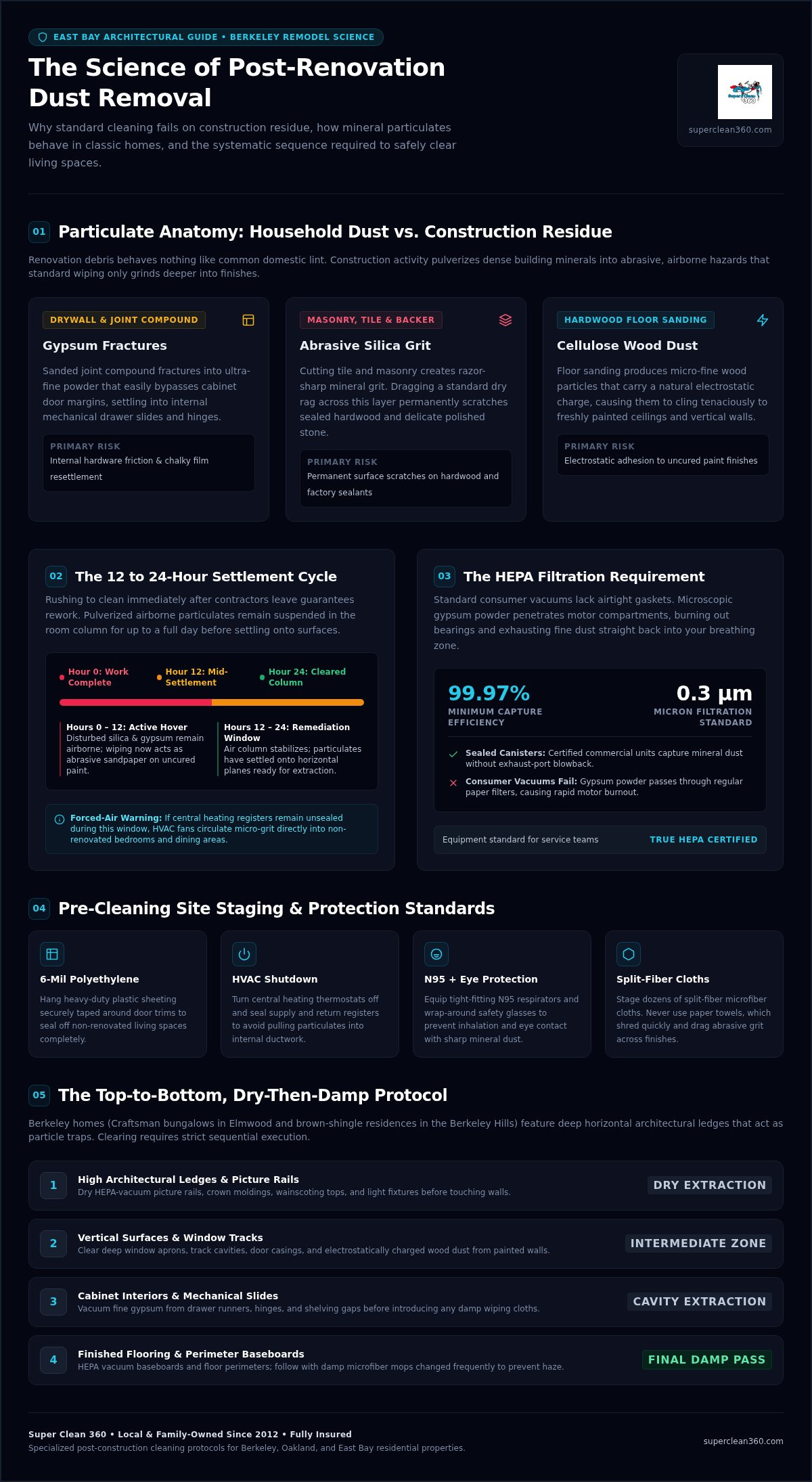
Remodeling debris acts nothing like standard domestic grime. While the typical composition of household dust consists primarily of fabric fibers, sloughed skin cells, and tracked-in garden soil, renovation residue is a complex mixture of pulverized building materials. Standard vacuums with basic filters simply cannot contain these microscopic bits; their exhaust ports blast ultra-fine particles right back into your indoor air.
Berkeley's classic architectural stock complicates the issue. Craftsman bungalows in Elmwood and brown-shingle homes in the Berkeley Hills often feature original picture rails, ornate wainscoting, and deep window aprons. These horizontal architectural ledges capture significant layers of debris, creating hidden reservoirs that continually shed particulates days after construction stops. Properly executing post renovation cleaning Berkeley residences need requires understanding both the physics of these particles and how our local architecture traps them.
The Composition of Remodeling Particulates
Construction generates sharp, mineral-dense debris that reacts aggressively with interior surfaces:
- Gypsum and joint compound: Sanded drywall compound fractures into tiny particles that bypass cabinet gaps, coating interior shelving and mechanical drawer slides.
- Abrasive silica: Cutting masonry, backer board, or tile produces silica grit that can permanently dull factory-sealed hardwood or scratch delicate stone surfaces if dragged by a dry cloth.
- Cellulose wood dust: Hardwood floor sanding creates ultra-fine wood dust that holds a natural electrostatic charge, clinging stubbornly to freshly painted walls and ceilings.
The Airborne Settlement Cycle
Patience plays a vital role in remediation. Disturbed remodeling particles hover in the air for 12 to 24 hours after trade workers leave the job site. Rushing to wipe baseboards while the air remains saturated is counterproductive. The settled grit acts like sandpaper against uncured paint, while falling particles promptly re-coat whatever you just cleaned.
Forced-air heating systems also accelerate cross-contamination. If supply and return registers remain unsealed during remodeling, the HVAC system pulls floating debris into the ductwork, blowing renovation dust straight into non-renovated bedrooms and dining areas. Successful post renovation cleaning Berkeley homeowners can rely on demands that the air column clears first, trapping particulates methodically from top to bottom before touching delicate finished materials.
Essential Tools and Preparation Before Starting Clean-Up
Before lifting a rag, you need the right protective gear and equipment. Standard household supplies quickly fail against heavy construction debris. Following recognized safety guidelines for renovation protects both your respiratory health and your home's brand-new surfaces.
Start by equipping yourself with well-fitted N95 respirators and wrap-around eye protection. Gather dozens of high-density, split-fiber microfiber cloths instead of paper towels, which shred easily and drag grit across fresh finishes. Lastly, inspect the entire renovation zone to confirm that trade subcontractors have finished every item on their punch list. Sweeping or wiping while an electrician or painter is still cutting materials will immediately undo your hard work.
The Role of HEPA-Filtered Equipment
Airtight HEPA filtration is non-negotiable for remodeling residue. True HEPA systems meet strict federal standards by capturing at least 99.97% of microscopic particles down to 0.3 microns in size. Standard domestic vacuums lack sealed canisters and tight internal gaskets, leaking fine gypsum powder straight through their motor seams back into your room. Fine mineral powder will also penetrate consumer vacuum motors, rapidly burning out the bearings. Using a sealed, commercial-grade HEPA vacuum prevents motor damage and captures the finest particulate safely.
Preparing the Physical Space for Dust Remediation
Proper site preparation keeps the mess contained while you clean:
- Hang heavy containment plastic: Seal interior doorways leading to unremodeled areas using 6-mil polyethylene sheeting taped securely around the trim.
- Shut off central heating: Turn off your HVAC thermostat completely during remediation so running fans don't suck airborne dust into ductwork.
- Clear contractor off-cuts: Ensure scrap lumber, tile fragments, and cardboard boxes are hauled out before beginning fine surface work.
Executing thorough post renovation cleaning Berkeley properties require takes methodical staging. If setting up physical containment barriers and handling specialized extraction vacuums feels daunting, booking a professional house cleaning service team ensures your living space is safely restored using commercial-grade filtration.
The Step-by-Step Post-Renovation Cleaning Protocol
Effective post renovation cleaning Berkeley homes require hinges on strict staging. Introducing moisture too early transforms fine drywall dust into a smeary paste that embeds deep into wood grain and tile grout. Removing construction residue demands an orderly, dry-first process that captures particulates layer by layer before wet cleaning begins. Scheduling a professional one-time house cleaning tailored for remodeling ensures this exact sequence is maintained from ceiling to floor.
Phase 1: High-Elevation Dry Extraction
Dust naturally drifts downward, so start at the highest architectural points in every room. Cleaning technicians begin by addressing ceiling fans, recessed light fixtures, structural beams, and crown molding. Equip a commercial HEPA vacuum with a soft-bristle horsehair brush attachment to lift fine powder without scuffing fresh paint or delicate plaster. Work systematically across high window valances, curtain rods, and upper door casings before moving down to mid-level surfaces, ensuring dislodged debris falls toward areas yet to be cleaned.
Phase 2: Vertical and Horizontal Surface Wiping
Once high-level dry vacuuming is complete, address vertical walls and horizontal flat surfaces. Fold clean microfiber cloths into quarters, creating eight distinct cleaning faces per towel. Dampen cloths barely enough to attract static particles without soaking them; excess moisture creates streaks and smears. Systematically wipe down window sills, switch plates, electrical receptacles, door handles, and baseboards. Flip the cloth frequently to a clean section so you trap particles instead of dragging sharp grit across newly applied finishes.
Phase 3: Deep Floor Restoration and Polishing
Floors accumulate every particle dislodged during the upper cleaning phases, making them the final step. Vacuum perimeter baseboard edges and floorboards thoroughly using dedicated hard-floor attachments that won't scratch delicate polyurethane or natural stone. Next, execute multiple damp-mop passes using clean microfiber pads and frequent water changes. Swapping rinse water repeatedly prevents the stubborn milky haze caused by dissolved joint compound drying back onto newly finished surfaces, leaving your renovated living space clean and move-in ready.
Critical Hidden Areas Remodelers Often Overlook
Closed doors don't stop microscopic construction dust. The air currents created by workers moving in and out of active zones force fine debris straight through cabinet gaps, mechanical joints, and hidden structural seams. Homeowners often believe remediation is complete once visible countertops and open floor areas gleam, only to open a vanity drawer weeks later and find gritty plaster powder covering personal essentials.
In older East Bay properties, complex architectural woodwork provides endless pockets for lingering debris. Successfully completing the deep post renovation cleaning Berkeley properties demand requires hunting down dust where casual inspections never reach, including under-appliance recesses, closet shelving brackets, and interior mechanical fittings.
Cabinetry, Drawers, and Hardware Remediation
Abrasive drywall dust settles aggressively on mechanical moving parts inside brand-new joinery:
- Drawer glides and hinges: Remove drawers entirely to vacuum the soft-close glides and interior track channels; lingering grit causes premature mechanical grinding and component failure.
- Interior shelving cavities: Wipe down every interior shelf corner and support pin hole before loading dinnerware, pantry staples, or wardrobe linens.
- Molding recesses and decorative profiles: Drywall grit collects along upper crown returns, decorative face frame beadings, and the undersides of handle pulls.
Vents, Architectural Trim, and Mechanical Fixtures
Mechanical air fixtures act like dust traps during remodeling work. Unfasten HVAC supply registers and return grilles completely to clean both sides of the louvers, vacuuming as far into the interior duct opening as a wand attachment safely reaches. Window tracks and sash channels also demand intensive care; heavy quartz, tile, and joint compound grit settles deep inside aluminum or vinyl balances, causing sliding windows to jam or jump their tracks. Finish by systematically wiping down radiant wall heaters, baseboard convectors, and water heater access closet doors throughout adjacent corridors.
Addressing these recessed spaces systematically guarantees that hidden grit won't work its way back into your living environment after you settle in.
DIY Cleanup vs. Professional Post-Construction Cleaning
Deciding between tackling dust remediation yourself and hiring professional help comes down to project scope, equipment access, and tolerance for physical exertion. Minor cosmetic updates, such as repainting a powder room or swapping a bedroom closet organizer, are often manageable for homeowners equipped with rented HEPA units. Whole-house additions, layout reconfigurations, and gut kitchen remodels generate particulate volumes that easily overwhelm domestic cleaning efforts.
When planning post renovation cleaning Berkeley property owners must weigh the true labor investment against the value of their time. Without specialized filtration machinery and methodical techniques, self-cleaning often turns into an exhausting cycle of wiping surfaces only to watch fine particles resettle by morning.
Assessing Scope and Time Investment
Fine particulate extraction demands multiple meticulous passes across every horizontal and vertical surface. A single homeowner can spend dozens of hours moving ladders, wiping light fixtures, and flushing mop buckets. Sourcing professional supplies adds up quickly, from renting commercial HEPA machinery to purchasing cases of microfiber towels and safety respirators. Beyond time and equipment rental expenses, the greatest DIY hazard remains accidental surface abrasion. Dragging mineral grit across freshly finished hardwood, designer tile, or custom lacquer can result in permanent scratches that require costly repairs.
When to Bring in Specialized Service Teams
Substantial renovations involving drywall sanding, stone cutting, or extensive flooring replacement warrant experienced service teams. Professional cleaning technicians deploy commercial-grade HEPA extraction systems and proven multi-phase workflows to capture particulate safely without damaging delicate new finishes. When vetting local providers, verify that the company carries comprehensive insurance coverage up to $2 million to ensure complete protection for your East Bay property.
Trained service teams work methodically to ensure agreed tasks meet exacting standards, letting you move back into a clean home without physical exhaustion. Once construction remediation is complete, setting up routine residential upkeep helps maintain indoor air comfort and preserves your new architectural investments for years to come.
Reclaim Your Freshly Renovated Berkeley Living Space
Reclaiming your living space after remodeling takes more than everyday tidying. Safely executing the thorough post renovation cleaning Berkeley properties require means respecting the airborne settlement cycle, working in a methodical dry-to-damp sequence, and utilizing true HEPA filtration to capture abrasive gypsum and silica dust before it circulates.
You don't have to carry the physical burden or the worry of scratched finishes alone. Locally family-owned and serving Berkeley and adjacent East Bay communities since 2012, Super Clean 360 brings meticulous care to your doorstep. Our cleaning technicians arrive equipped with premium HEPA-filtered vacuums and professional-grade supplies, backed by comprehensive insurance coverage of up to $2 million to safeguard your newly renovated investment.
Take a moment to celebrate the craftsmanship of your updated home. With the abrasive construction residue systematically cleared away, you can unpack your furnishings and settle into a pristine, comfortable living environment.
Frequently Asked Questions
How long after construction finishes should I start post-renovation cleaning?
Wait at least 24 hours after all contractor activity and trade punch lists conclude before beginning clean-up. Airborne micro-particles take a full day to settle out of suspension onto horizontal planes. Starting earlier results in wasted effort, as falling particles instantly recoat freshly cleaned areas. If ongoing touch-ups occur, delay final cleaning until tradespeople completely vacate the premises.
Can I use a regular household vacuum to clean up drywall dust?
No, standard residential vacuums shouldn't be used to clean fine drywall or masonry dust. Domestic units lack sealed housings and genuine HEPA filters capable of trapping particles down to 0.3 microns. Ultra-fine gypsum slips directly through basic paper or fabric filters, blowing back into your living areas while penetrating the vacuum motor assembly, which causes internal overheating and permanent mechanical failure.
Why does fine white construction dust keep reappearing after I wipe surfaces?
White dust reappears because disturbed microscopic particulates continue settling from the air column long after surface wiping ends. Using dry rags or standard brooms creates static charges that launch particles back into ambient room air rather than capturing them. When planning post renovation cleaning Berkeley homeowners must rely on damp microfiber wiping and staged HEPA extraction to trap particulates permanently instead of redistributing them.
What is the difference between standard deep cleaning and post-construction cleaning?
Standard deep cleaning targets lived-in household buildup like kitchen grease, soap scum, and everyday surface dust, while post-construction cleaning tackles industrial building residues. Remodeling leaves behind abrasive silica, joint compound powder, paint overspray, and adhesive films across trim and fixtures. Post-construction remediation requires specialized HEPA-filtration equipment, personal protective gear, and multi-stage dry-to-damp sequences to safely restore newly renovated rooms.
Will post-renovation cleaning safely remove dust inside HVAC air ducts?
Surface cleaning teams remove register covers, wipe vent louvers, and vacuum accessible duct openings, but deep in-duct cleaning requires a dedicated HVAC specialist. Professional cleaning technicians thoroughly clean the exterior housings, wall grilles, and initial duct collars to prevent surface dust from blowing back into living spaces. If extensive drywall dust entered unsealed return plenums during remodeling, scheduling a specialized duct-cleaning contractor is recommended before final home occupation.
How do cleaning technicians prevent fine renovation dust from scratching delicate surfaces?
Cleaning technicians prevent scratching by using soft-bristle HEPA vacuum attachments first, lifting loose mineral grit before introducing any damp wiping. When performing post renovation cleaning Berkeley projects require gentle handling of new hardwood floors, glazed tiles, and stone counters. Technicians use high-density microfiber cloths folded into clean quadrants, rotating faces constantly and replacing rinse water frequently to avoid rubbing sharp silica residue against freshly sealed materials.
Do I need to be home while professional cleaning technicians complete the work?
No, you don't need to remain on-site while cleaning technicians carry out the remediation protocol. Many East Bay homeowners arrange access via lockboxes, key codes, or meet the team briefly at the start of the appointment. Fully insured service teams work systematically through the agreed scope of work, contacting you upon completion so you can conduct a final walkthrough and review the refreshed space.


